
Get a Free Log Home Restoration Estimate
Send us a few details and some photos of your log home so a Log Master can provide a preliminary proposal.
Start Your Free Estimate
"*" indicates required fields
Would you rather talk it through first? Call 844-567-2329.
What Happens After You Submit
The email arrives within a few minutes and confirms we have your request. It includes a link to send your photos, in case you closed this page before uploading them. If you do not see it, check your spam or promotions folder.
Someone on our team goes through your photos, your address, and the concerns you described. We also pull up aerial and street views of your property to see the layout, the access road, and anything around the home that affects the work. The more you send us, the less guesswork is involved.
Your proposal covers estimated cost, scope of work, and a timeline. If something in your photos needs a closer look, we tell you what we need and why before we send numbers.
For a More Accurate Estimate, Send Us Photographs
Photos do most of the work in an online estimate. Some damage is hard to describe in words and is clearer in a photo.
What to Look For
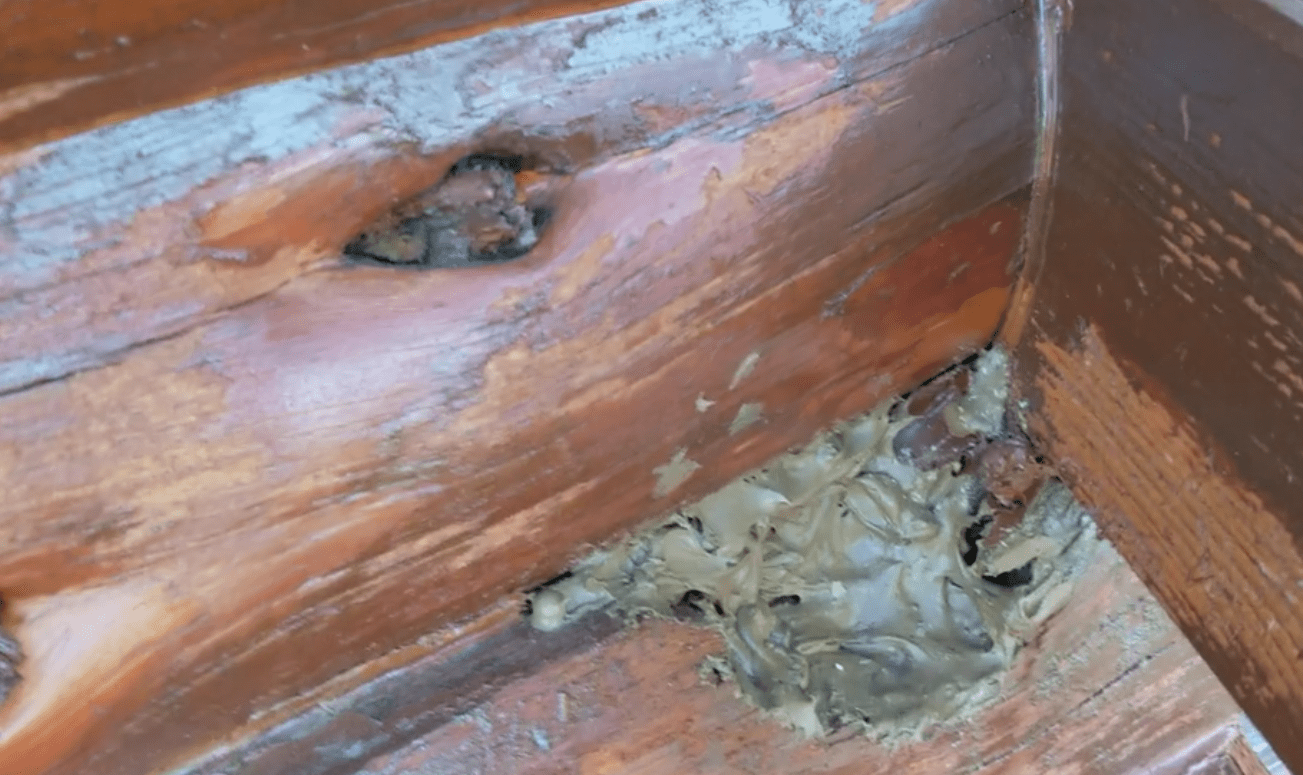
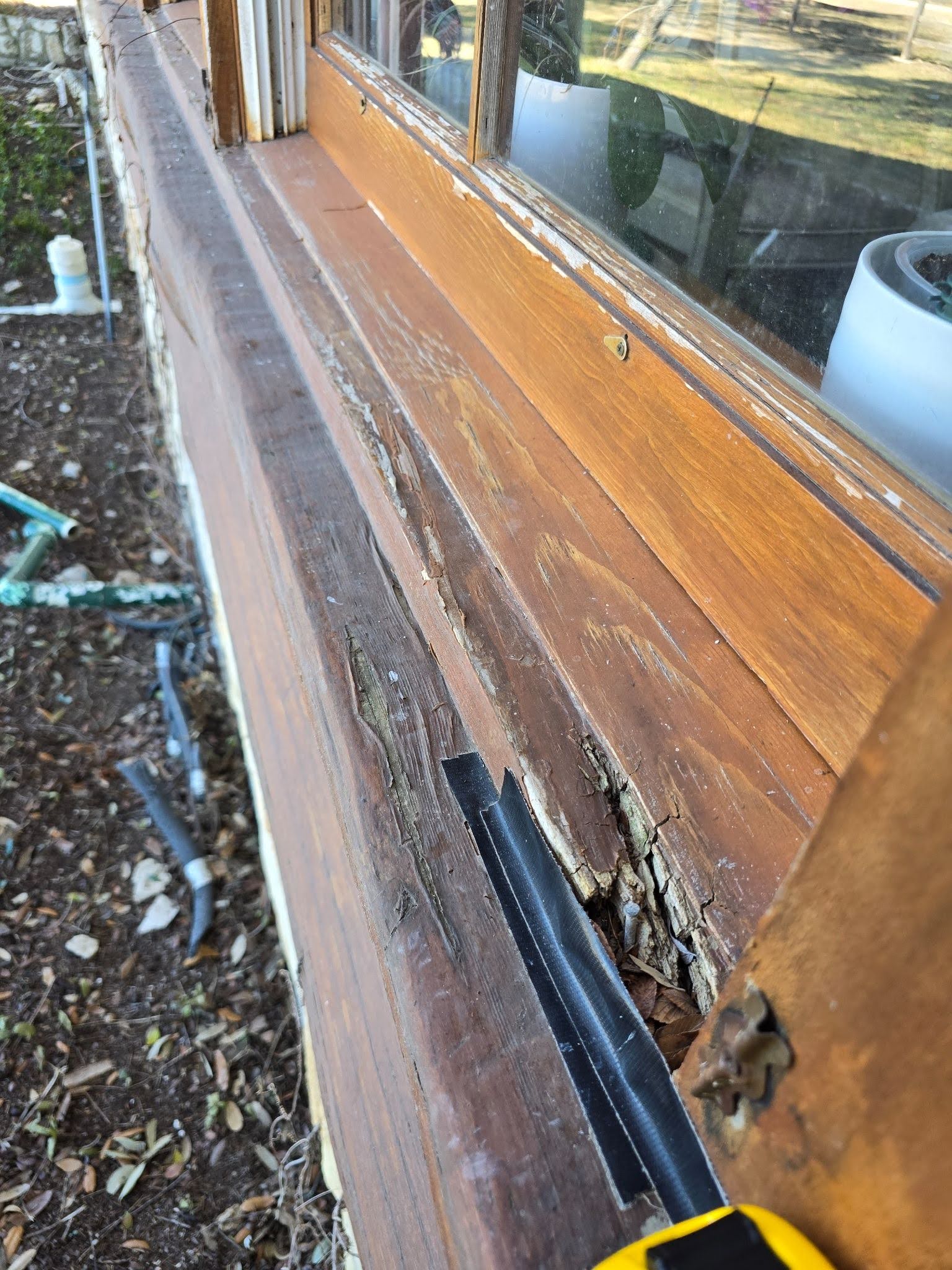
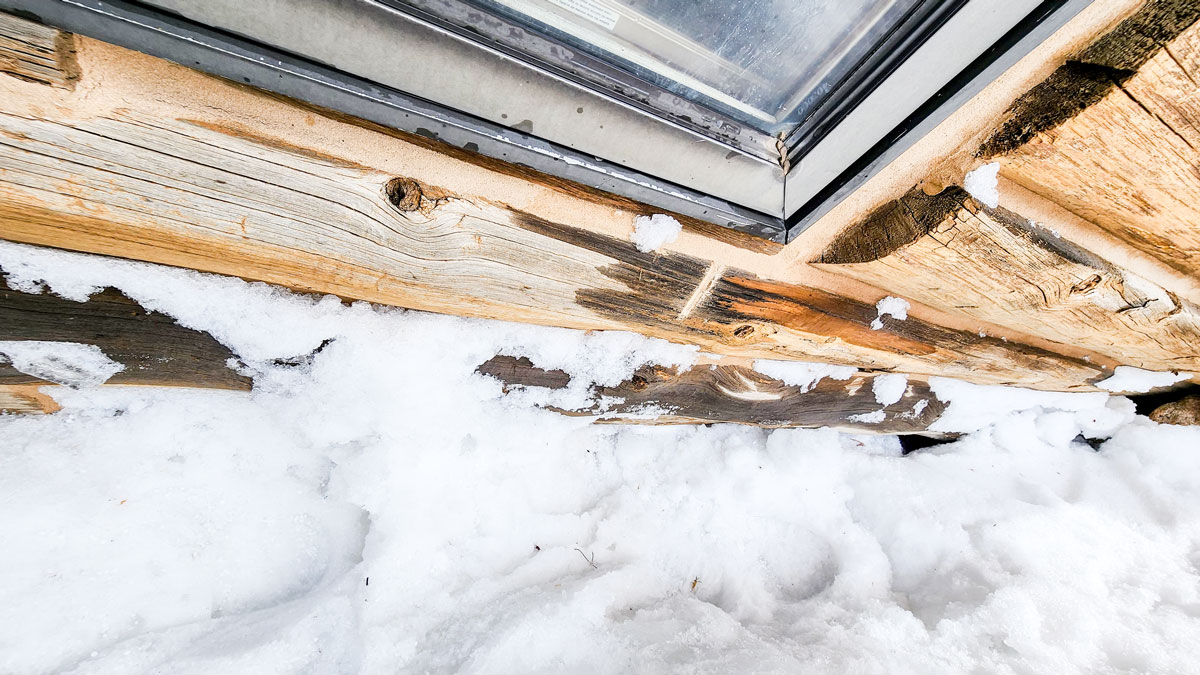
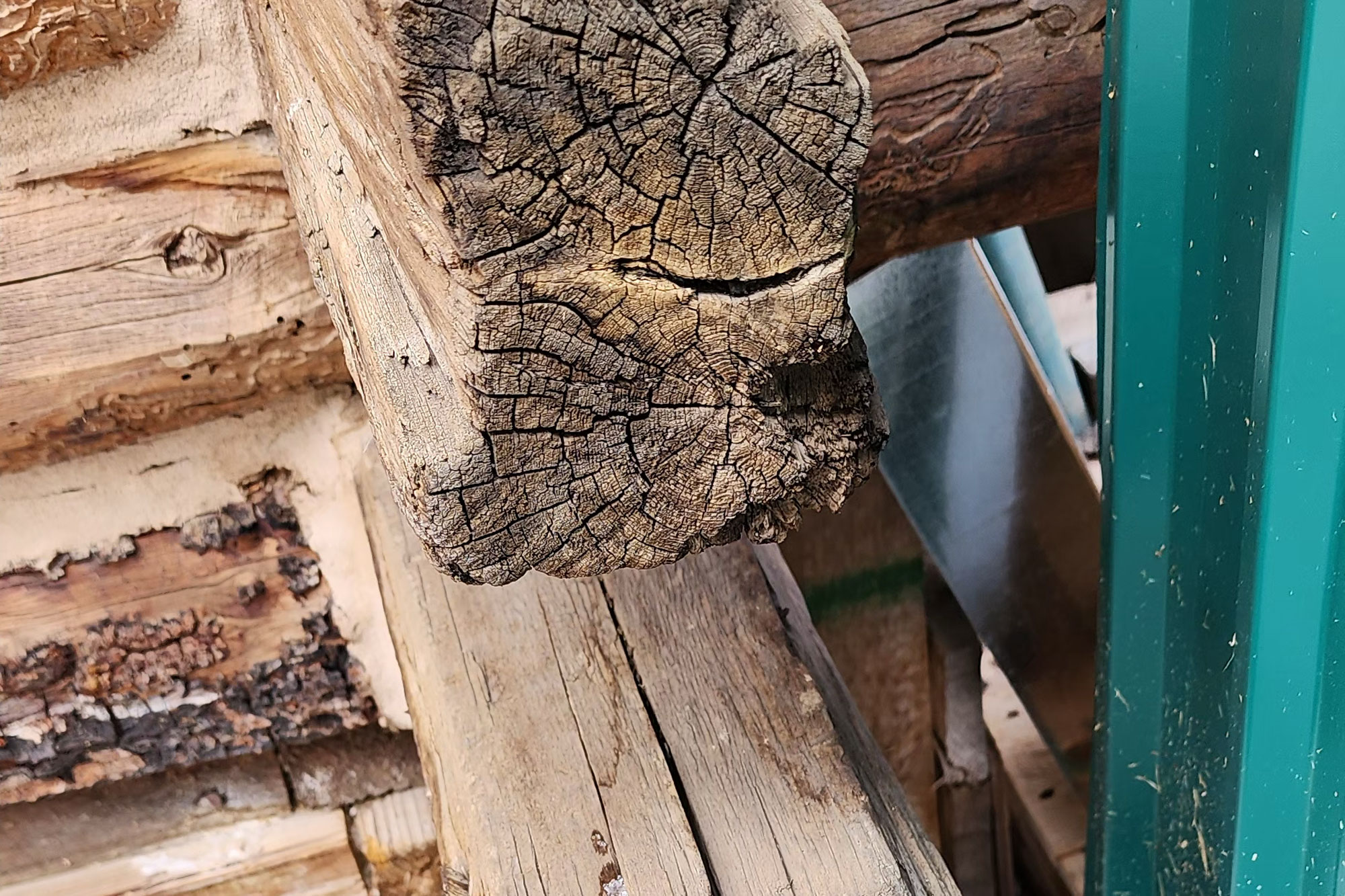
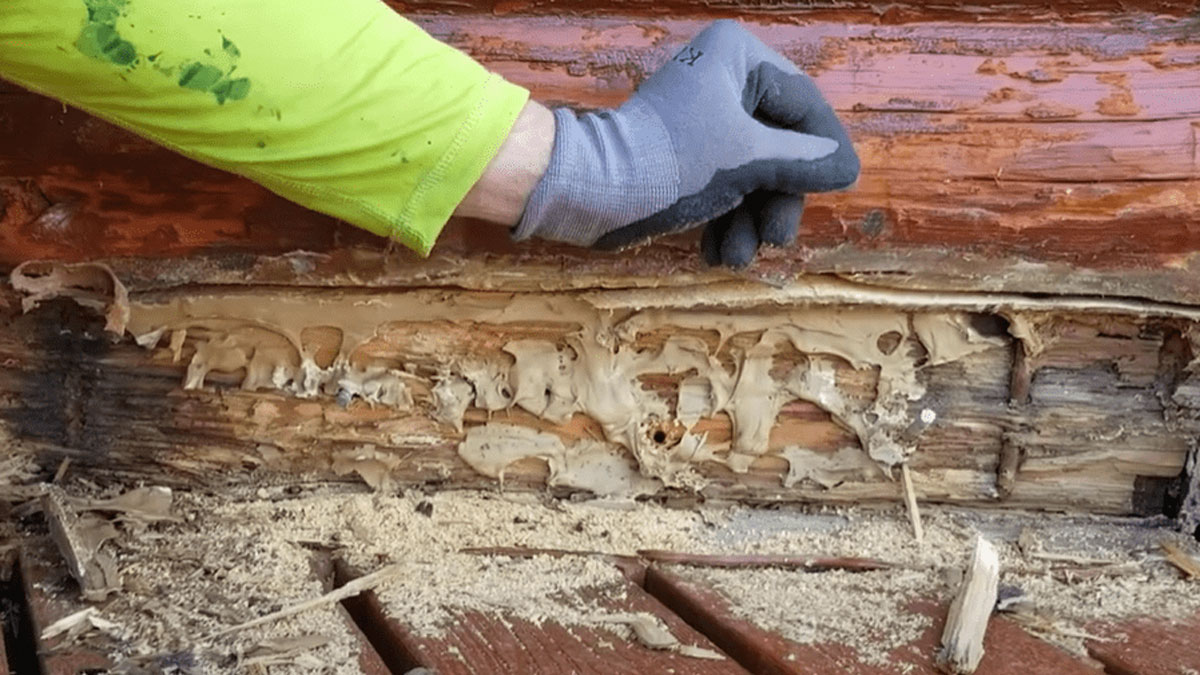
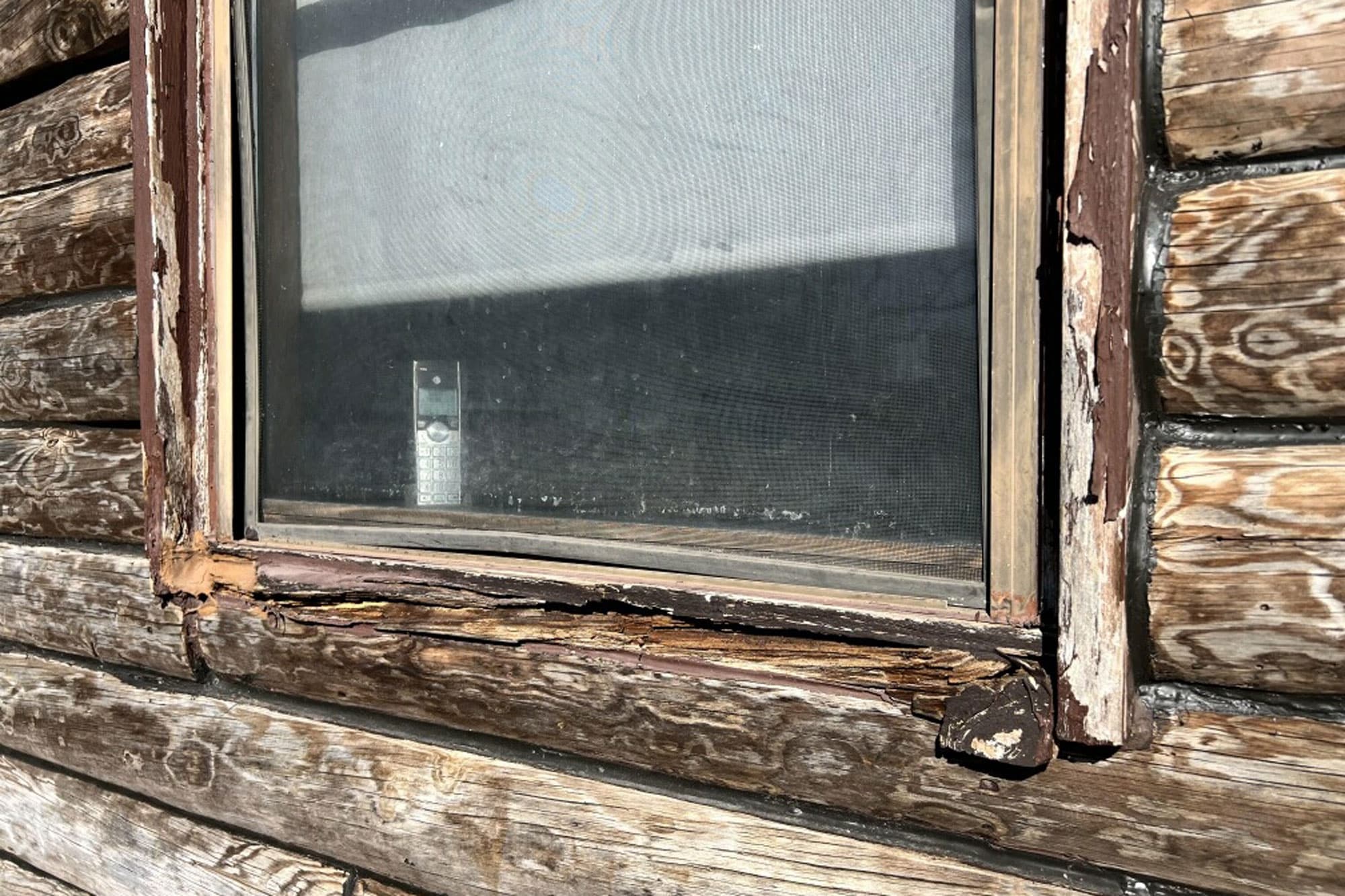
- Rot or decay—soft spots, discoloration, or spongy wood. Poke suspect logs with a skewer. If it sinks in, record the depth the skewer goes into the log, mark it with blue painter’s tape, and move along the log until it stops sinking. If the depth changes, note it with tape. Also, photograph the spot so our team can see it.
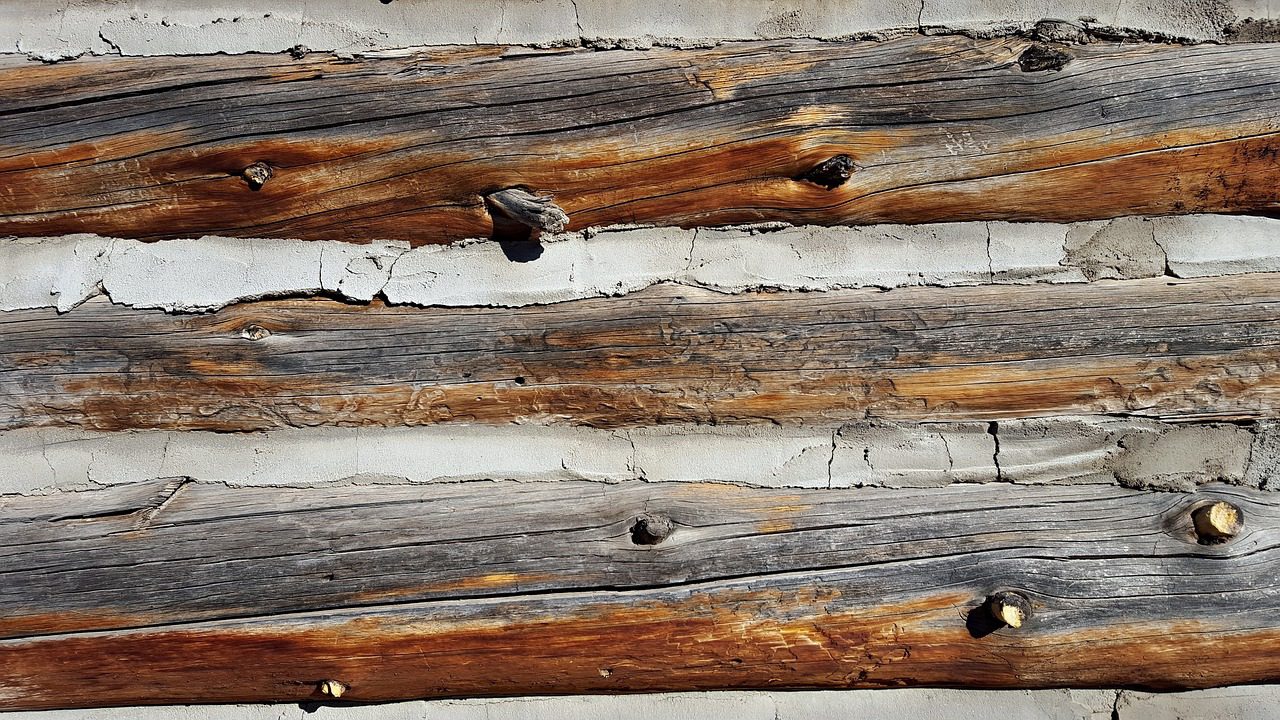
- Cracks and checks. Anything wider than a quarter inch, and any crack facing upward that can hold water.
- Fading or stain failure. Uneven color, dull patches, or areas where water no longer beads up.
- Sealant problems. Gaps in the chinking between logs, and caulk pulling away from windows and doors.
- Moisture and drainage. Pooling water, clogged gutters, or roof overhangs that are too short.
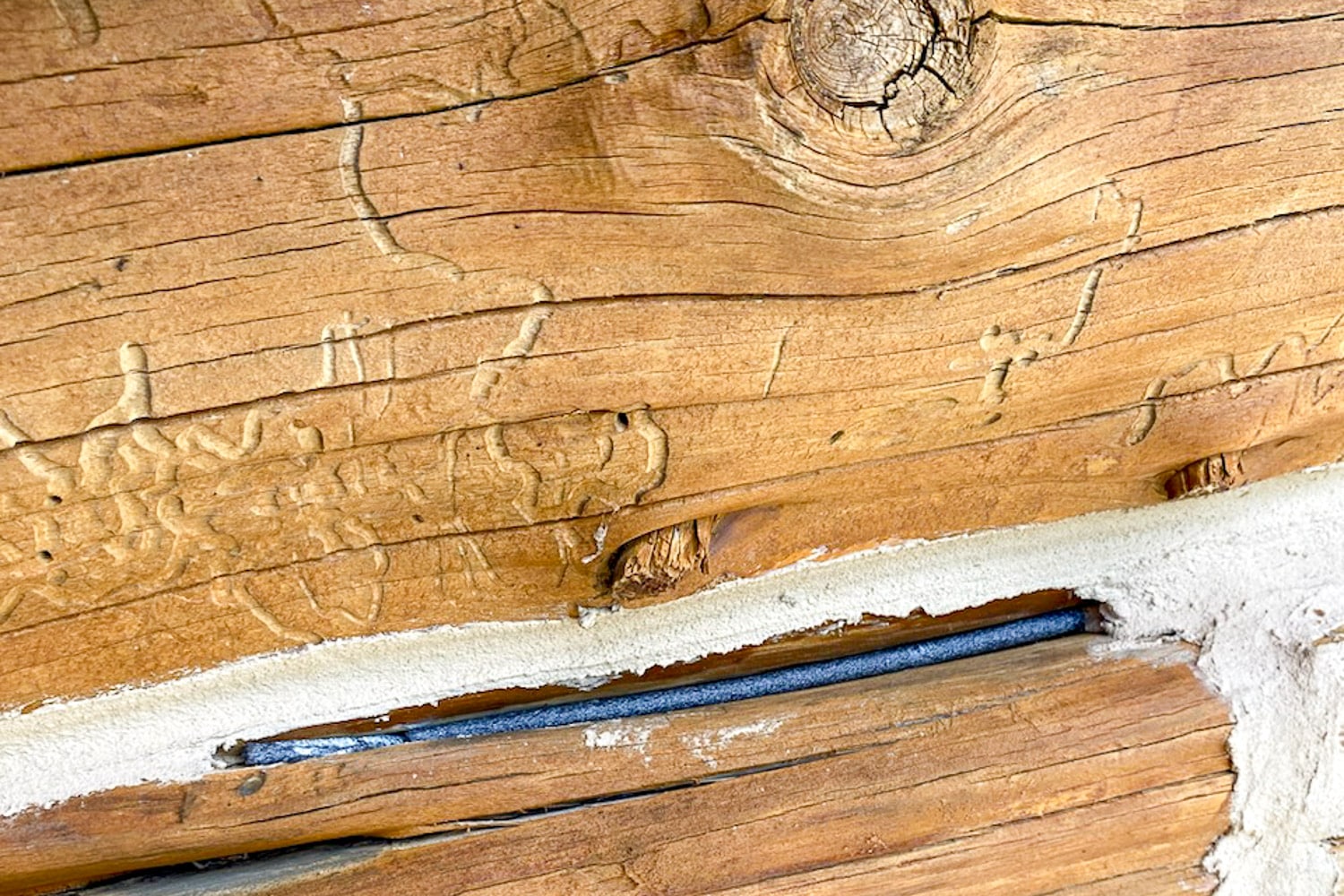
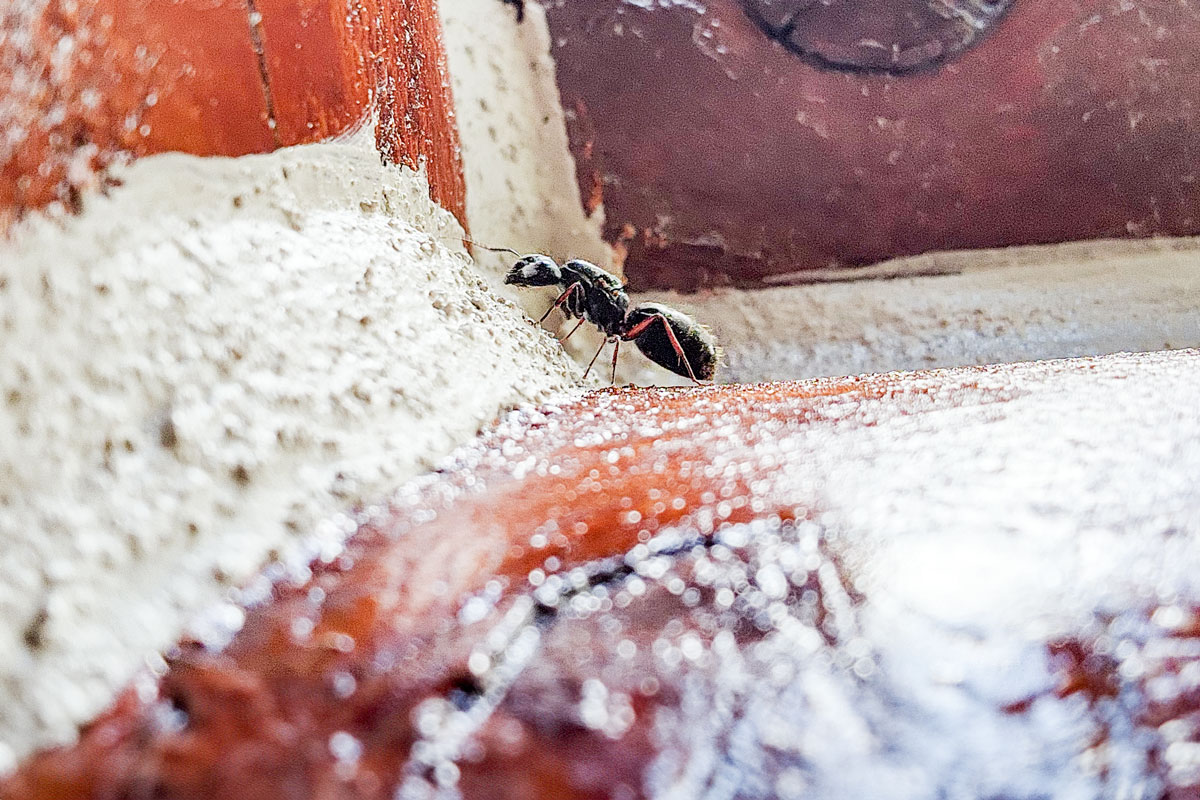
- Insect damage. Round holes about half an inch across, piles of fine sawdust, pencil-sized mud tubes, or live carpenter bees near the eaves.
- Landscaping. Branches touching the logs, plants growing within two feet of the wall, or soil and mulch piled against the logs.


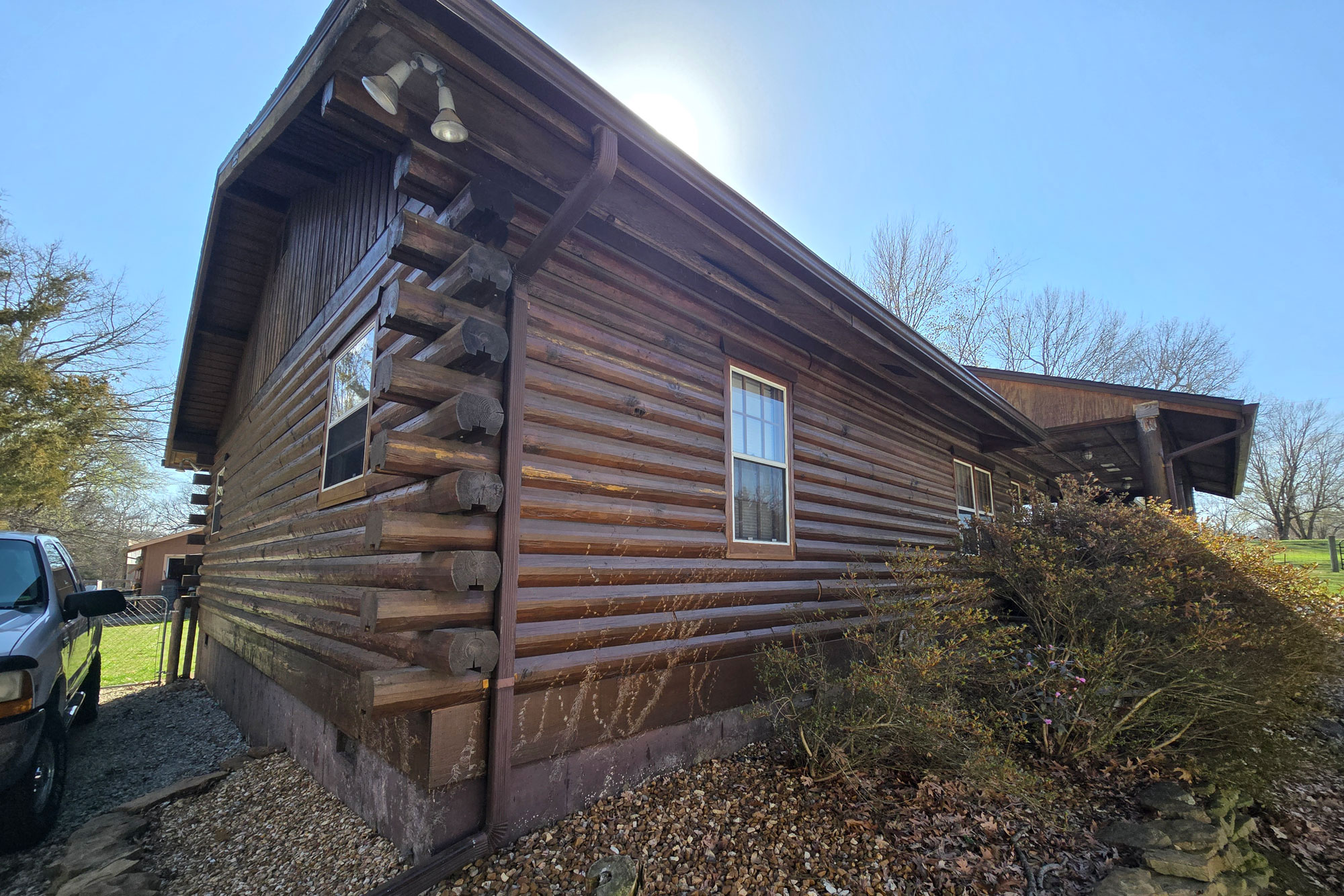
Areas Worth a Close Look
- Around window and door frames
- Logs less than a foot off the ground
- Logs near downspouts
- Porch posts and columns
- South and west walls, which take the most sun
- North and east walls, which stay damp longer
- Decks and porches, if you want them included in the estimate
Also Send Us
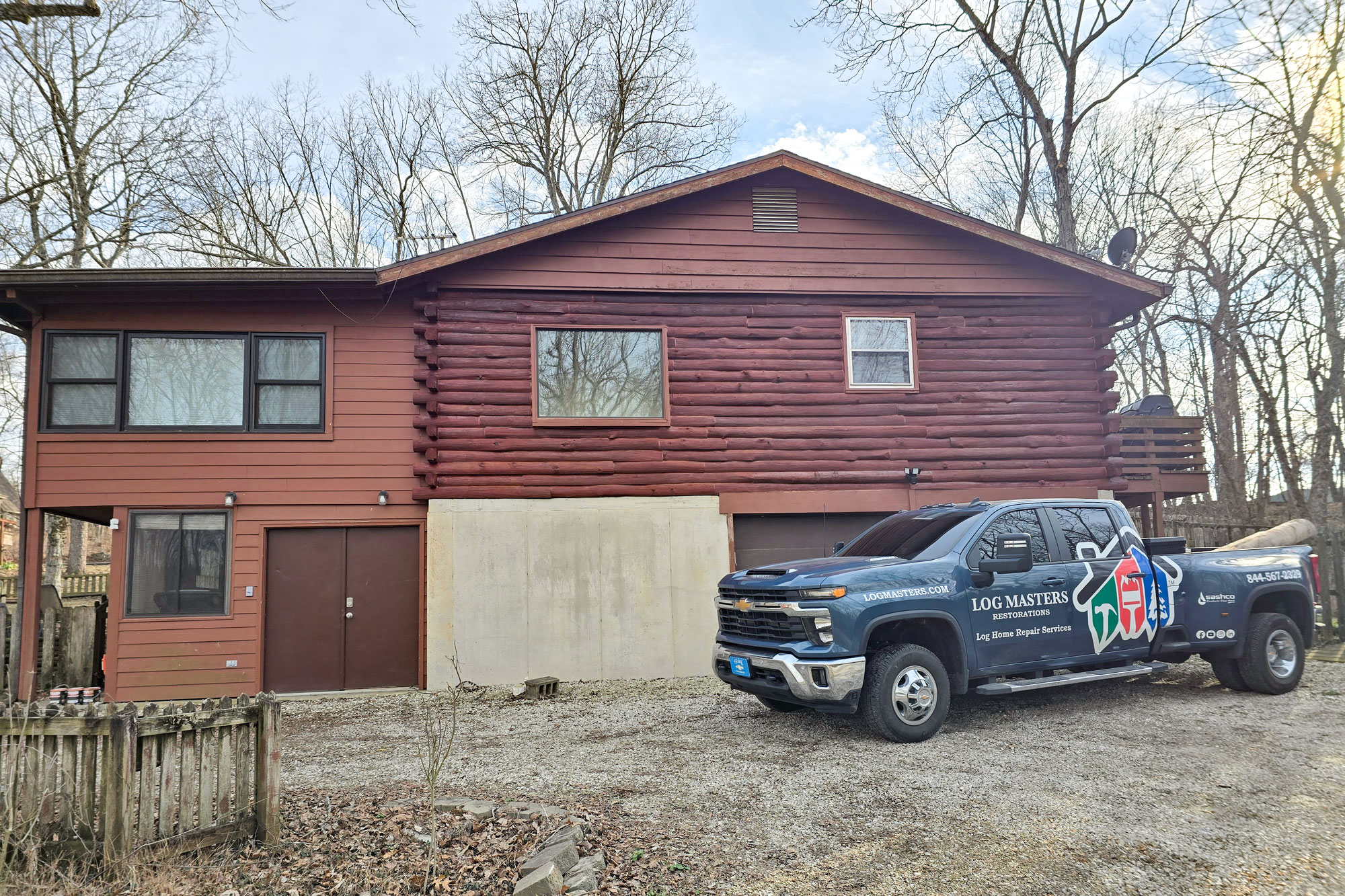
- A wide shot of each side of the house
- The road in, if getting a truck to your home is difficult
- Any power lines attached to the cabin
- The setting, if your home sits over or beside water
How to Take the Photos
Good photos keep your proposal accurate and reduce change orders once work begins. That being said, images with a smartphone are fine – precision matters more than the camera.
Our recommendations:
- Set a tape measure, a ruler, or a quarter next to cracks and rot so we can see the scale
- Take several angles of anything that looks like rot, insect damage, or separated caulk
- Get close on the problem, then step back for a wide shot of the same wall
What Affects Your Estimate
No two log homes are alike, so we price every one from scratch. Here is what we look at.
Your Logs
Log-sided and log-built homes need different approaches. So do the species and the style: full scribe, post and beam, timber frame, D-log, Swedish cope, and others. Plenty of homes have more than one style, especially when an addition went up years after the original build. Style changes how long a repair takes and what materials we order.
Chinking and Caulking
Sealants close the gaps between logs. Mortar chinking costs less up front, but it cracks as a house settles and lets moisture sit behind it. Synthetic chinking flexes with the logs through the seasons and lasts longer. What you have now affects both labor and material cost.
Rot and Insect Damage
These two usually account for the largest share of a restoration cost. Most rot means replacing the affected logs. Insect damage often stops short of replacement, but it still takes several steps before we can re-stain.
Previous Repair Work
Repairs done by someone without log home experience often cost more to correct than the original problem would have. We have found rot sealed under a heavy coat of stain, still spreading to the logs beside it. If your home has been worked on before, tell us.
Clear Finishes
A clear finish with no pigment leaves the wood open to UV damage. We usually find cloudy patches, black spots from moisture, and peeling or bubbling. All of that adds prep work before anything else can start.
Time Since Your Last Maintenance
Log homes need attention every two to three years in humid climates and every four to five years in dry ones. Past that, prep gets heavier, more logs need replacing, and material costs climb.
Location and Access
Your address tells us how far our crew travels and where they will stay. We check aerial and street views before we quote. A steep dirt road, trees crowding the walls, or water at the edge of the property all change what equipment we can bring and which products we recommend. Homes more than an hour from one of our offices add lodging costs for the crew.
Ready to Start the Process?
Fill out our estimate form and let a Log Master assess what your home needs.
Having issues submitting your form? Email [email protected].