
Log Home Sanding & Grinding Services
Precision Surface Prep Before Staining
Rough Surfaces & Stubborn Stains Require More Than Blasting
Media blasting removes most failing finishes, but sometimes it’s not enough.
After blasting log home surfaces, stubborn stain can remain in tight areas or deep grain. Tail ends may still be rough. Certain sections may need smoothing before the stain can properly penetrate.
That’s where sanding log cabin exteriors and precision grinding come in.
Sanding log home surfaces is not about making them perfectly smooth like furniture. It’s about proper preparation before refinishing so your stain system performs the way it should.
What Sanding & Grinding for Log Homes Actually Is
Sanding and grinding are surface-preparation methods used after media blasting or in targeted areas where additional refinement is required. These services prepare the wood for staining and ensure consistent absorption.
Professional sanding logs involves:
Removing stubborn stain left after blasting
Smoothing tail-end grain
Refining rough surfaces
Leveling uneven transitions
Preparing wood for stain adhesion
Improper pressure washing and stain removal can scar logs and leave behind damage that requires sanding and grinding to restore.
Sanding wood on a log structure requires experience. Over-sanding can flatten grain and change the character of the logs. It also makes stain absorption uneven and difficult. Under-sanding can leave behind finish remnants that compromise stain performance.
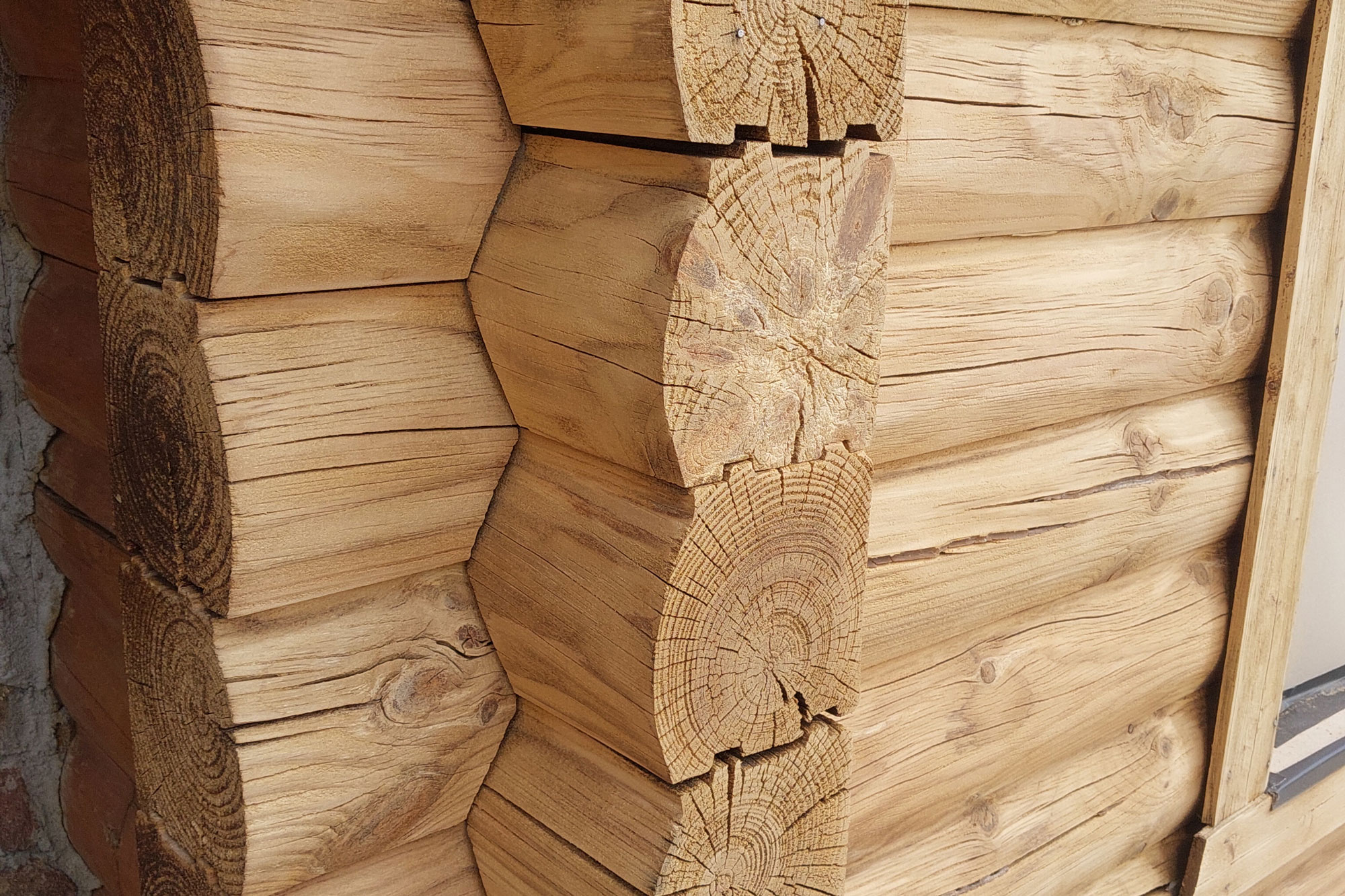
Grinding is typically used on exposed tail ends to smooth rough end grain while preserving the natural log profile.
Not sure if sanding log home surfaces is necessary before staining?
What Sanding & Grinding Does for Your Home
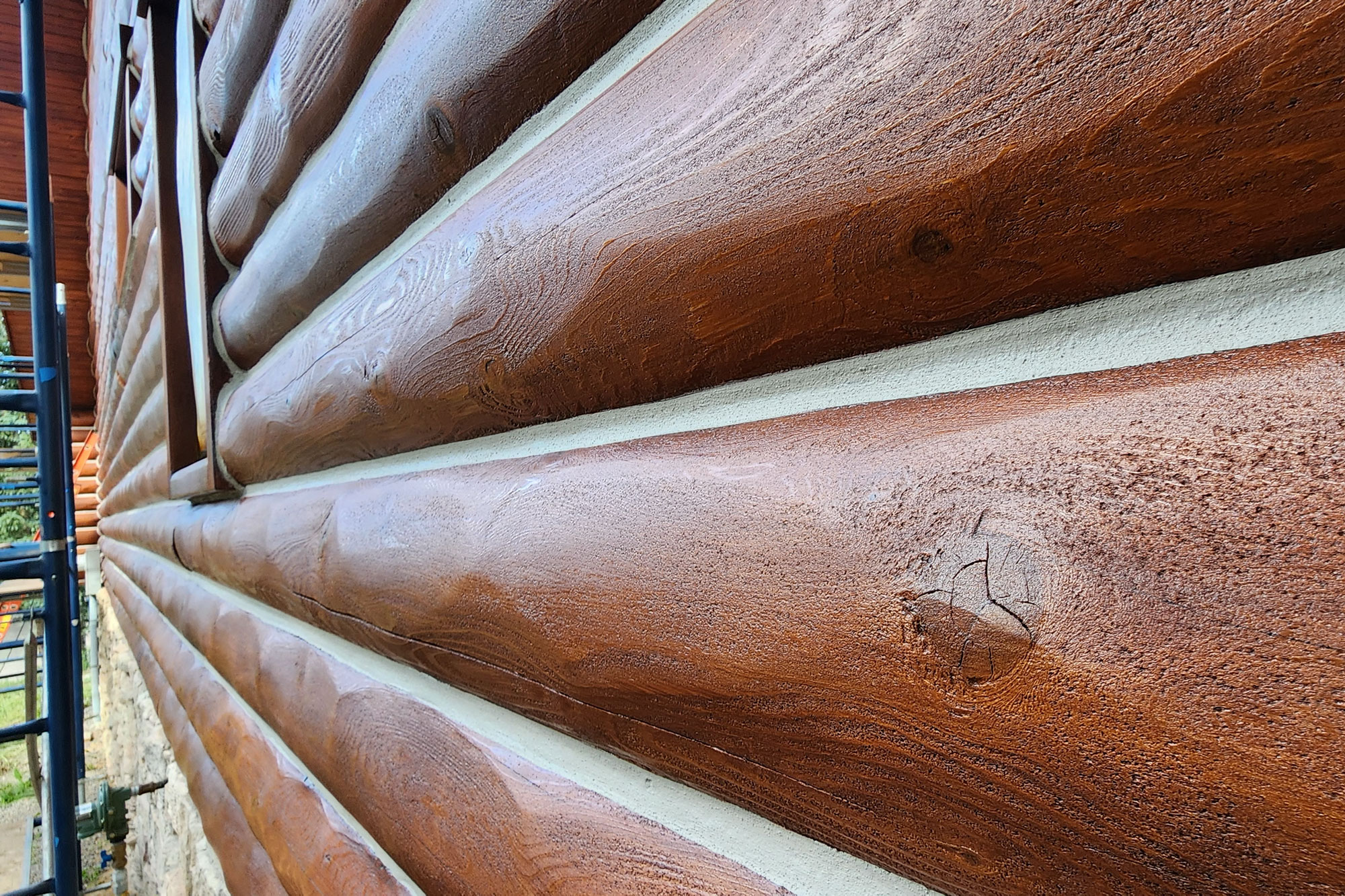
Ensures Even Stain Absorption
Sanding log cabin exteriors removes residual finish and opens the wood surface, allowing stain to penetrate consistently.
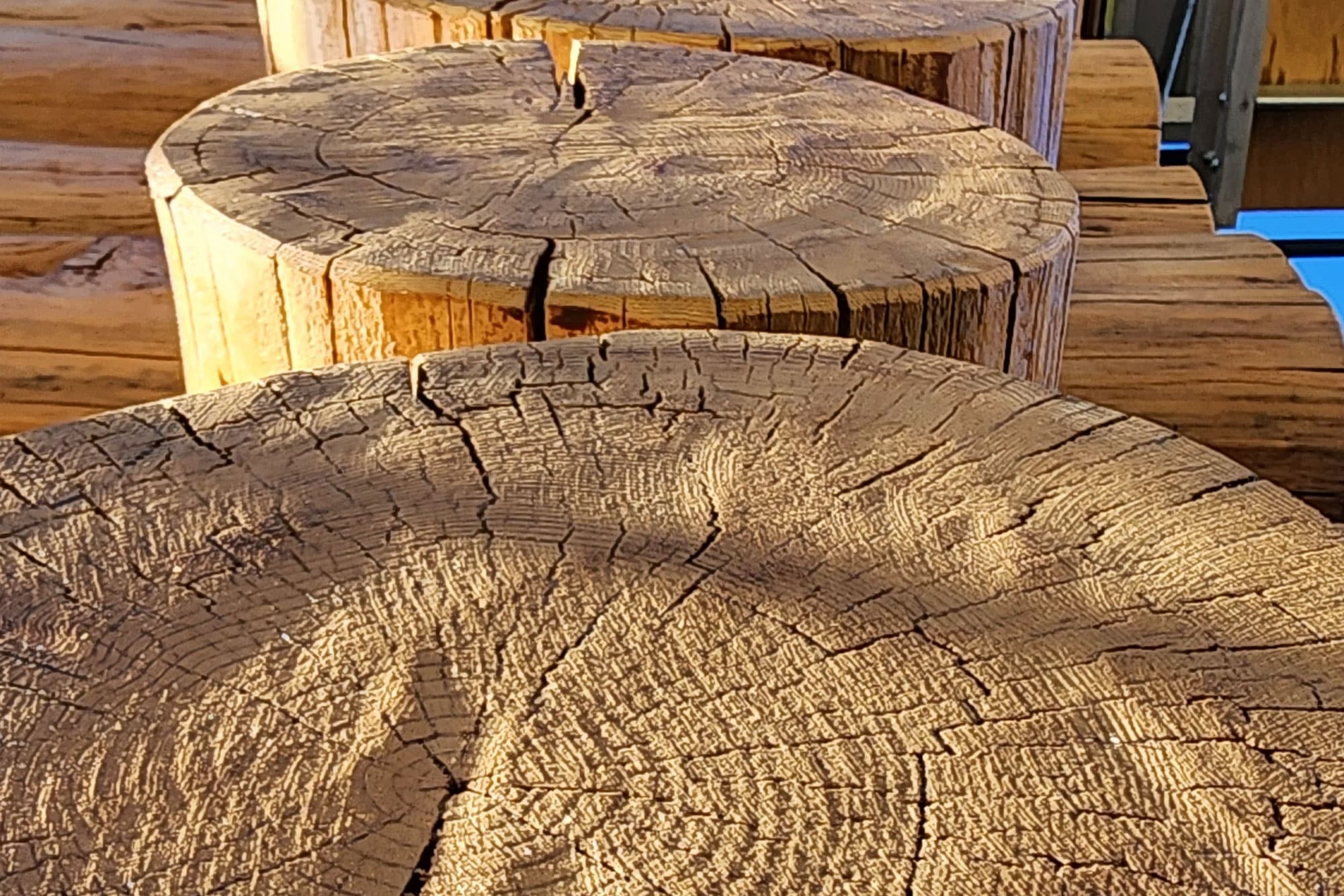
Refines Rough Tail Ends
Grinding smooths exposed end grain without altering the structural profile of the logs.
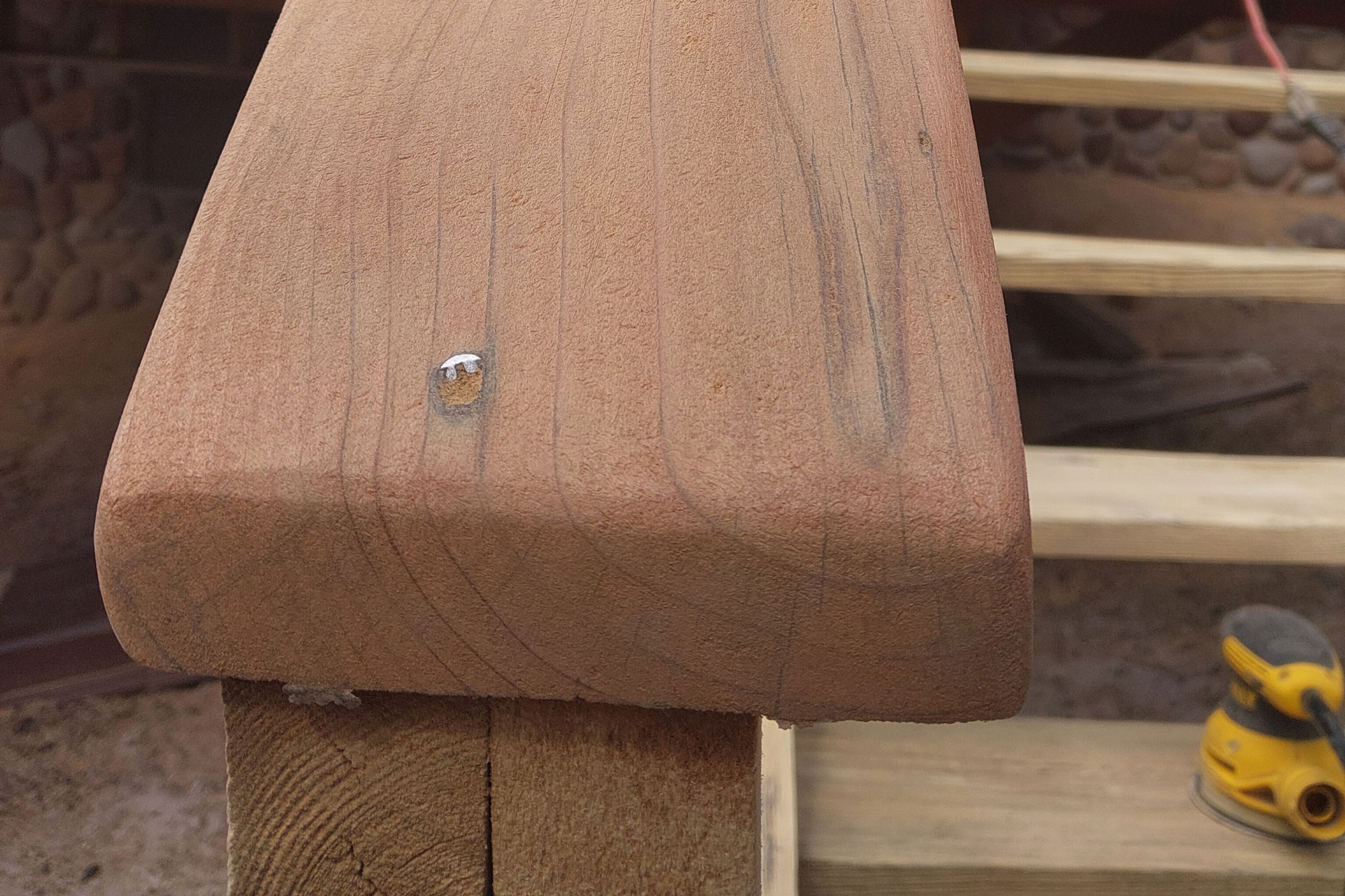
Improves Long-Term Finish Performance
Properly sanding wood before staining reduces blotchiness and premature stain failure.





How Our Sanding & Grinding Process Works
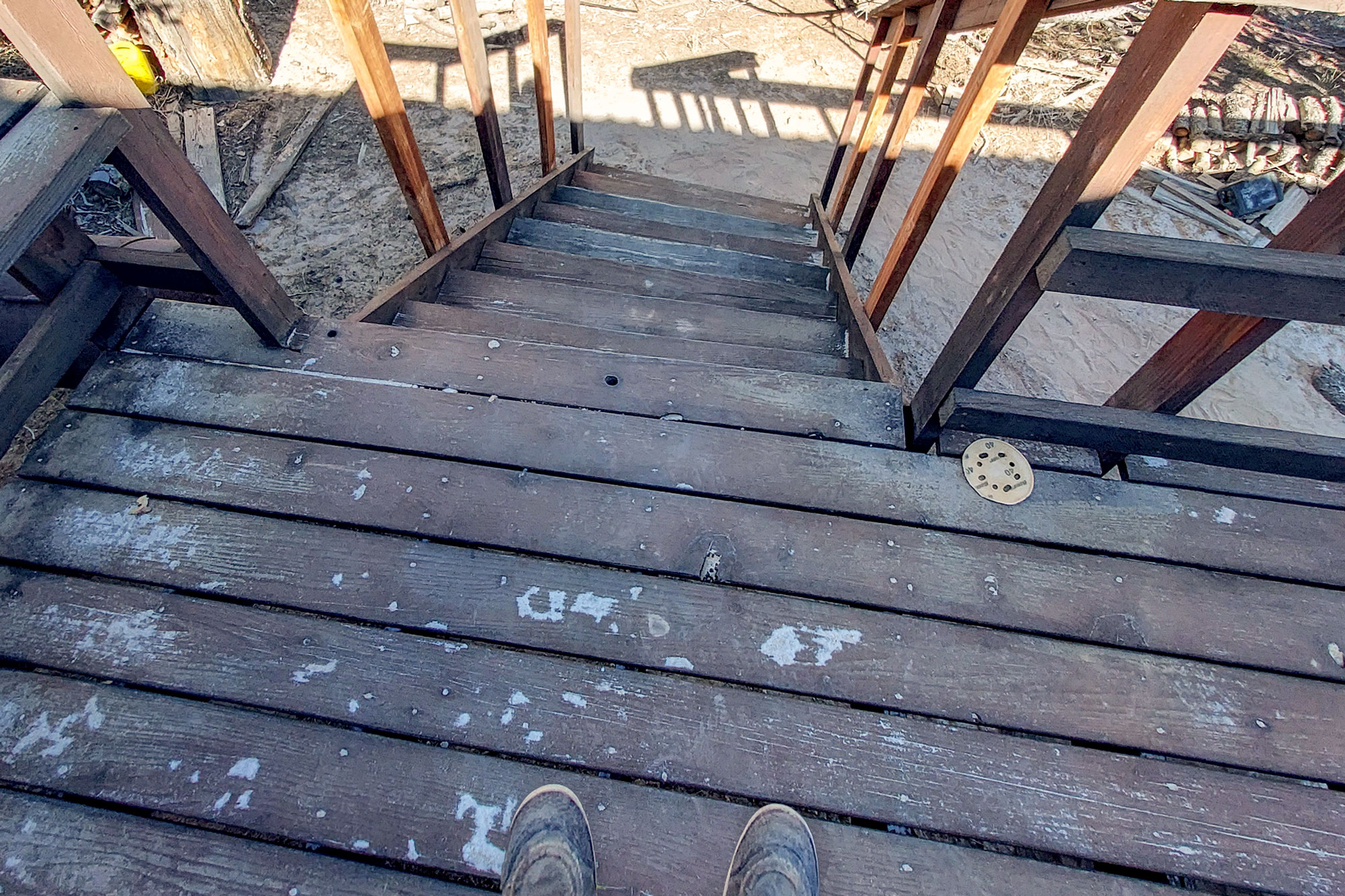
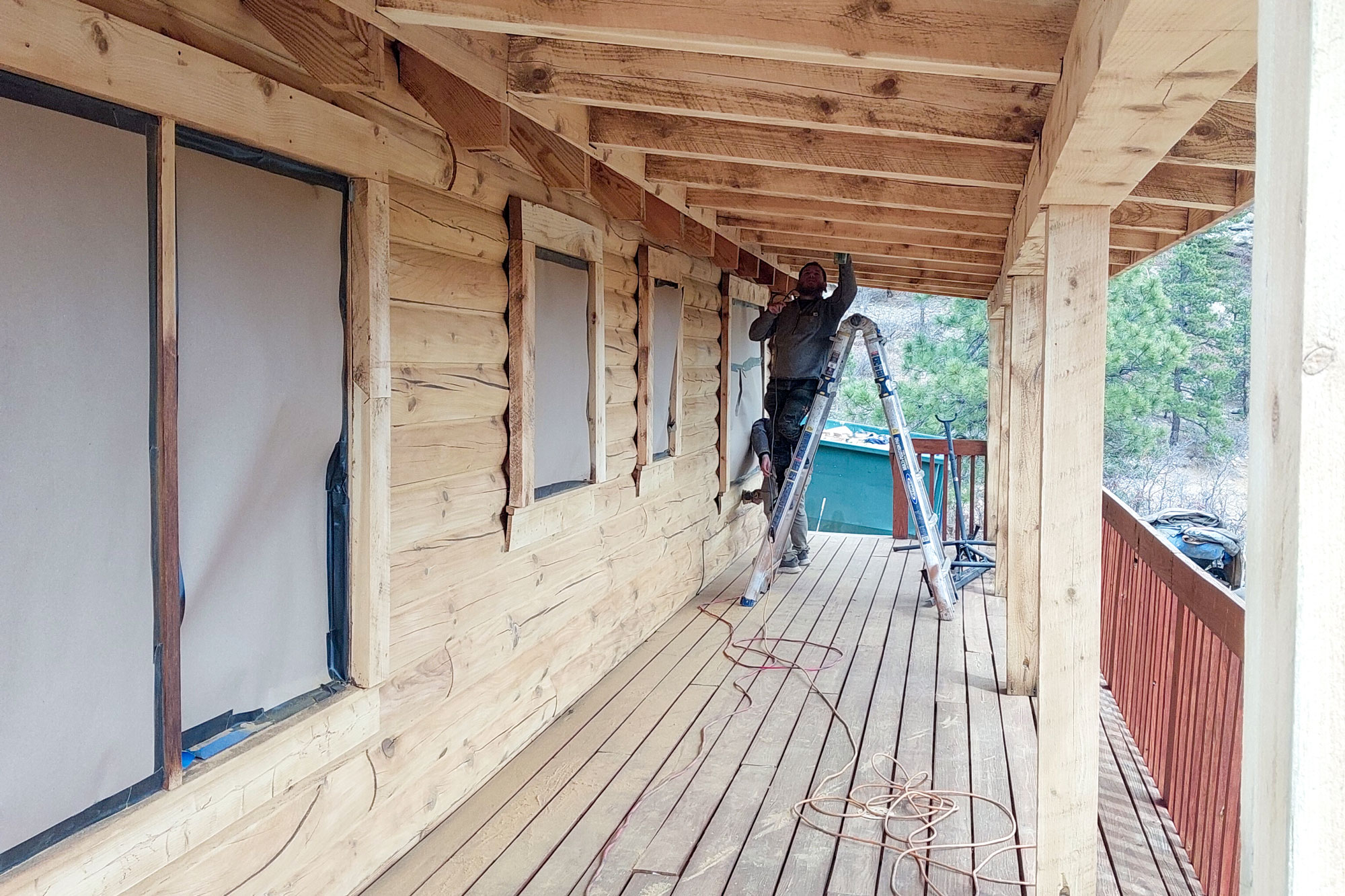
Step 1: Evaluate Surface Condition
We determine whether sanding log home surfaces is necessary following media blasting or if targeted sanding is sufficient.
Step 2: Controlled Sanding
Using professional sanding equipment, we remove remaining stain and refine surfaces without flattening the natural wood grain.
Step 3: Precision Grinding on Tail Ends
We use grinders specifically on rough end-grain areas to create a smooth, stain-ready finish while maintaining the log’s character.
Why Cabin Owners Trust Log Masters for Sanding & Grinding
We Don’t Over-Sand
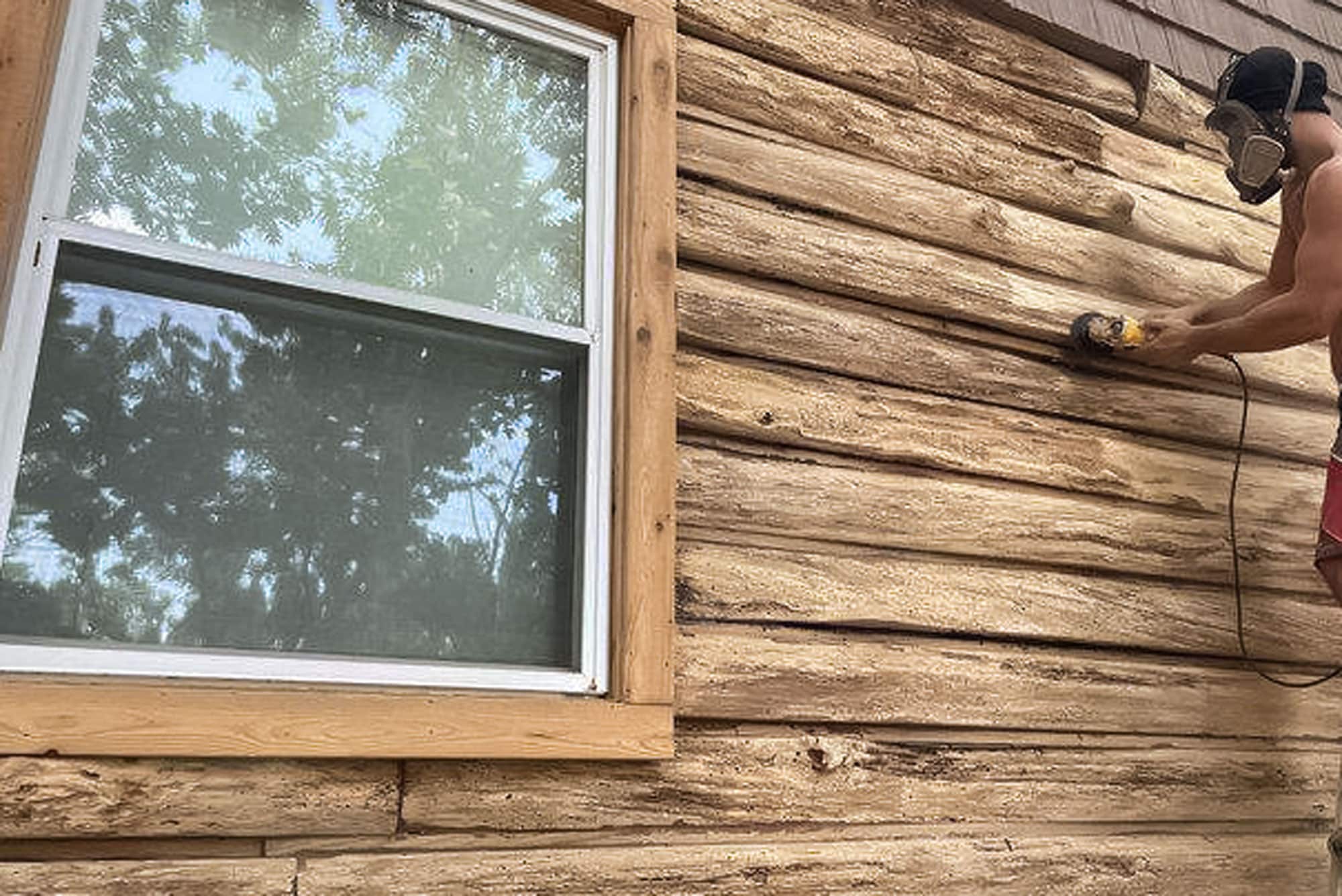
Our goal is surface preparation, not altering the log’s shape or profile. Using sanders and grinders, we prep each log to a “semi-smooth surface” for optimal stain adhesion.
We Integrate Sanding Into the Full Restoration Plan
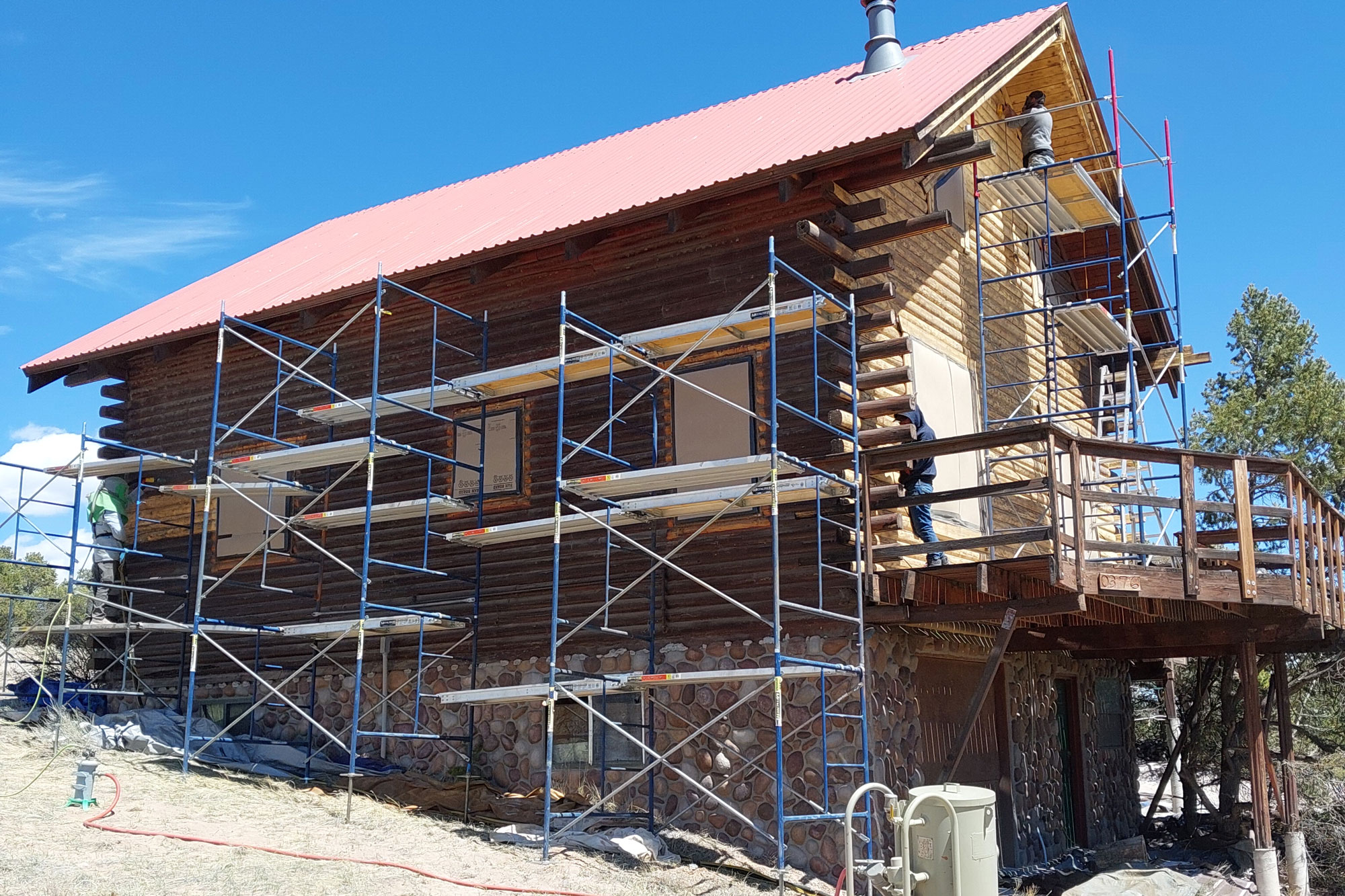
Sanding log cabin exteriors is typically one step in a larger restoration process, not a standalone cosmetic service.
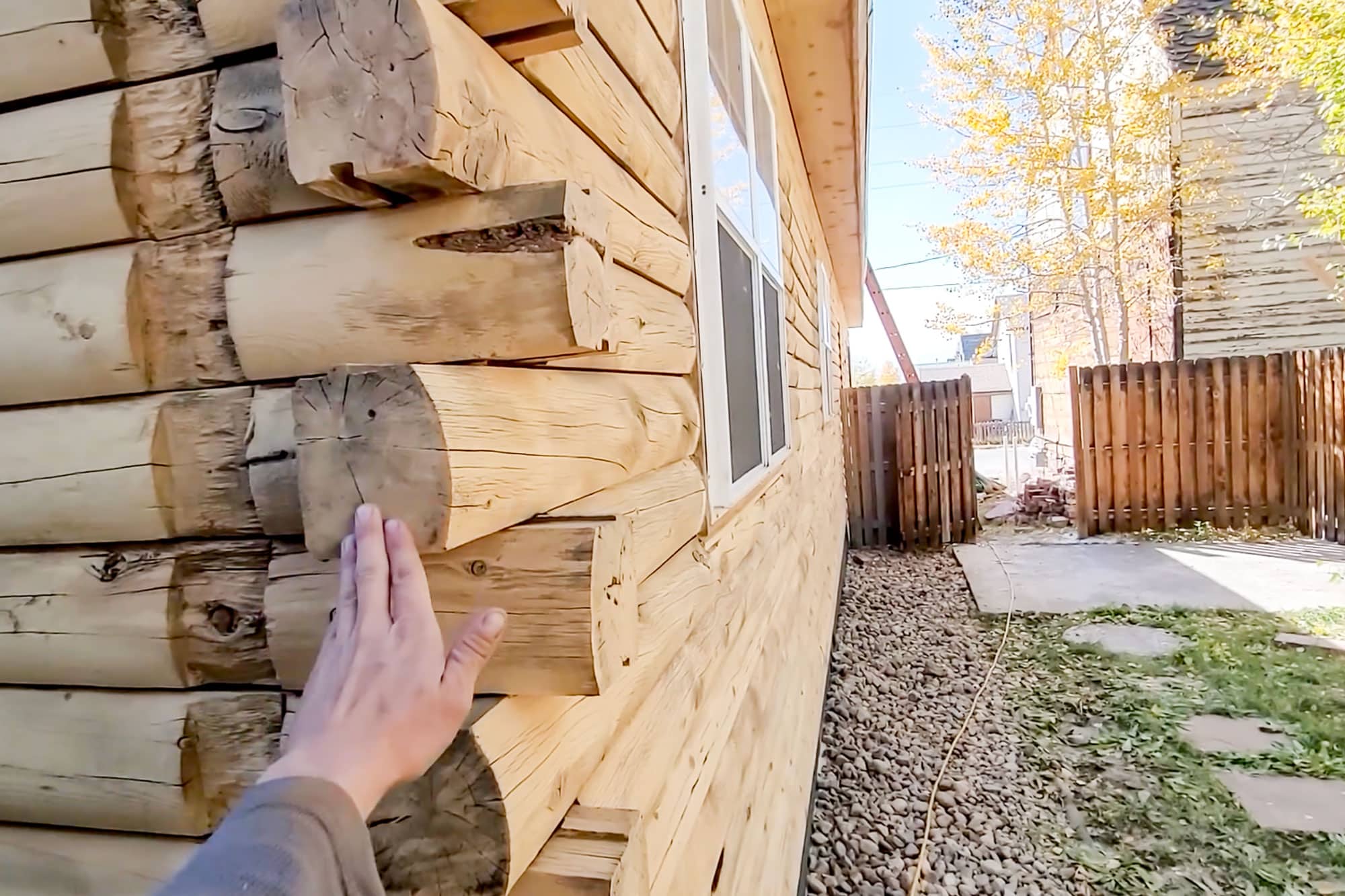
We Understand Wood Behavior
Different log species respond differently to sanding. We adjust the technique accordingly to protect your home.
Ready to prepare your logs for proper staining?


Thank you!!!



For new log homeowners - brace yourself because quality work in this space is expensive and hard work. Our quote came in at more than six figures, but we felt confident that the job would be done well and set us up for our decades to come in this house.
The team was on site for the better part of 6 weeks, away from their families and hard at work day in and day out. The results were truly transformative. The house began in gray latex paint, and ended up well-sealed and coated in a wonderful coat of stain. Our neighbors showered us with compliments for getting the house redone the way a log home is meant to look.
By the end of LMR's time with us, the crew was like a part of our extended family, and it was hard to see them go. I can't recommend this company highly enough.


Log Home Services That Work Together
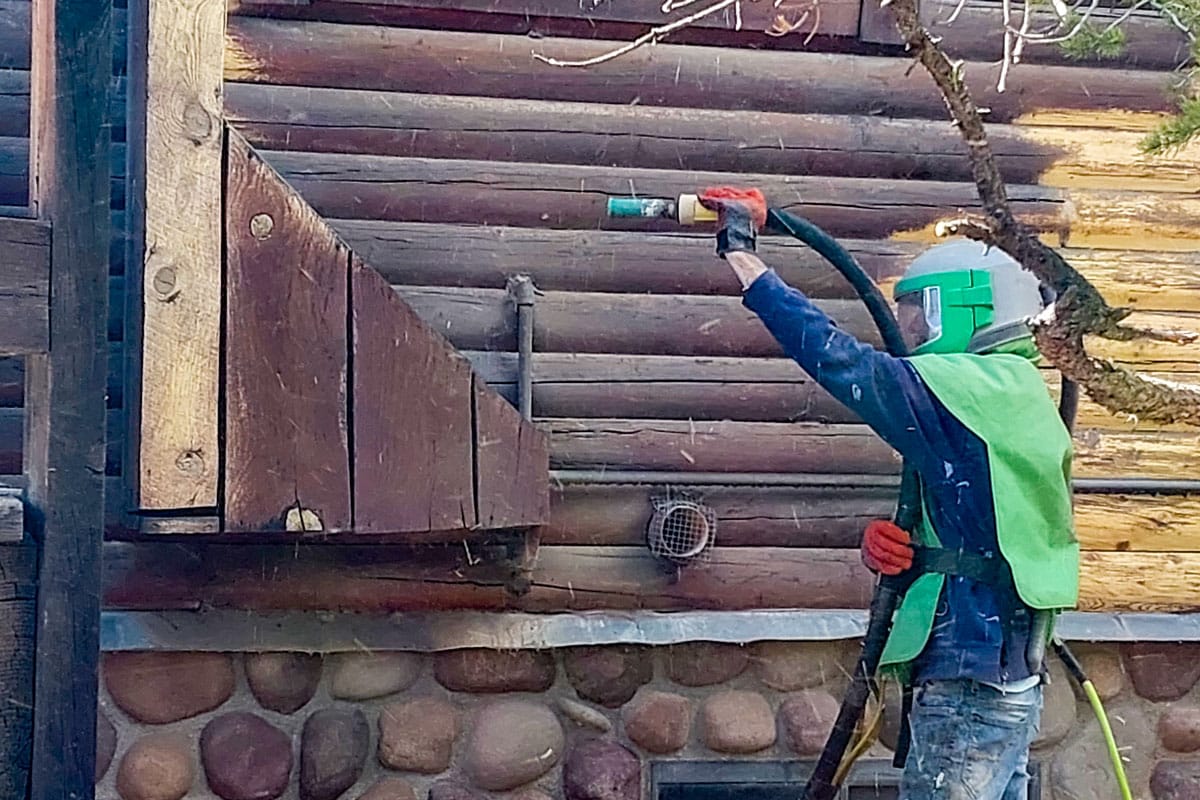
Media Blasting
We use controlled media blasting to safely remove old coatings while preserving the integrity of the logs. Pressure, media type, and technique are adjusted specifically for each home.
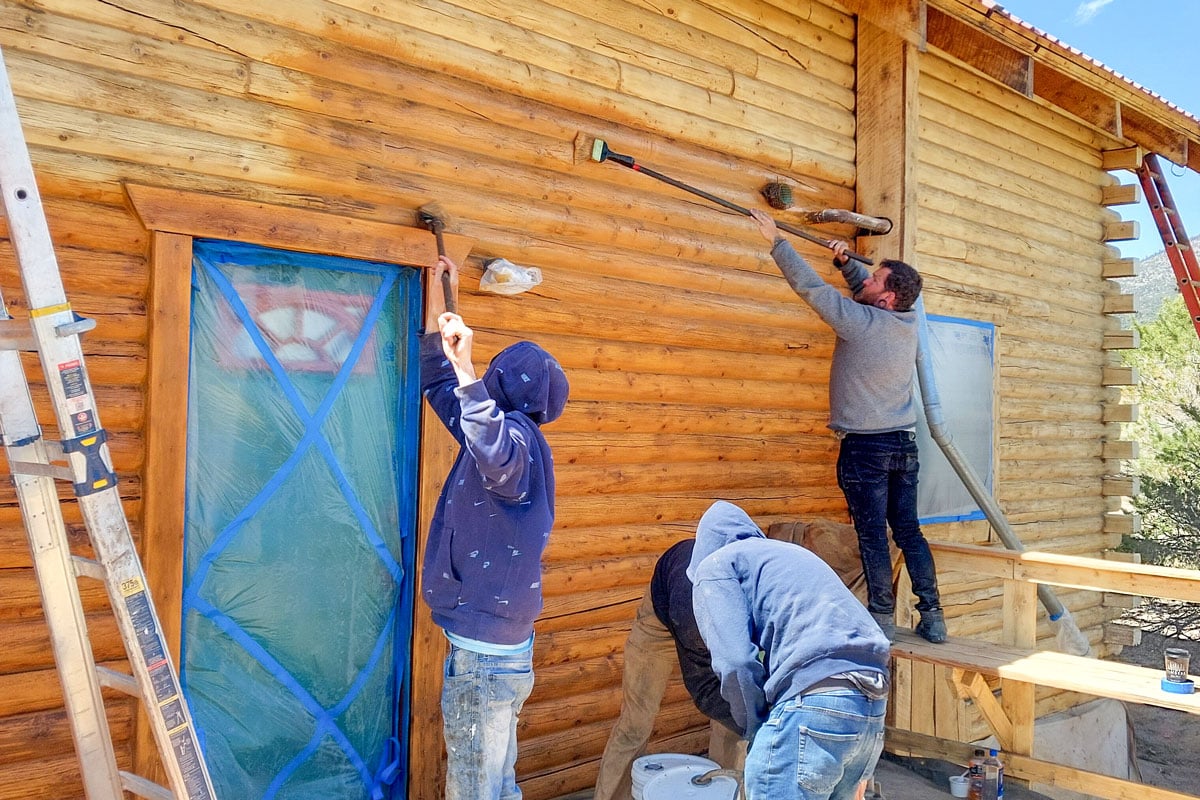
Staining
We apply premium log‑home‑specific stain systems designed for log construction. Application methods are adjusted to match wood condition, climate exposure, and project needs.
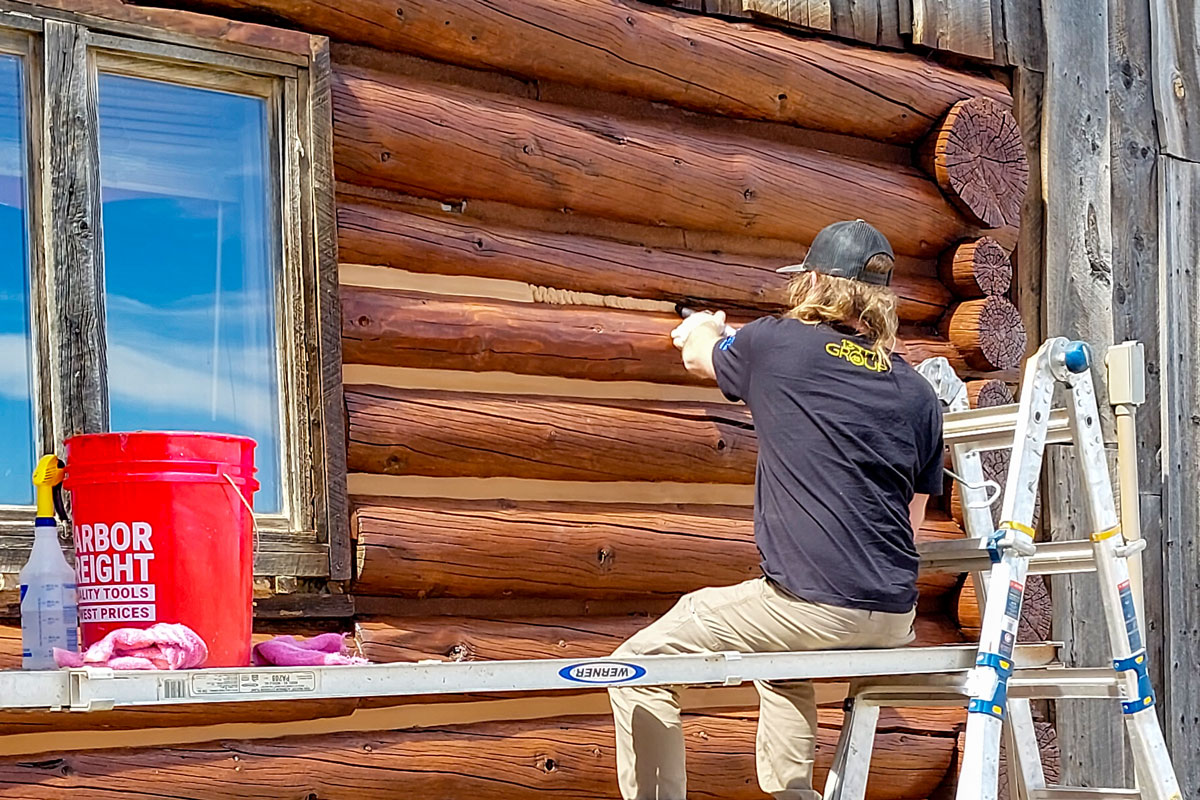
Chinking
Some log homes use chinking between courses for structural sealing, weather protection, or aesthetic design. Proper adhesion, depth, and flexibility are critical for long‑term performance.
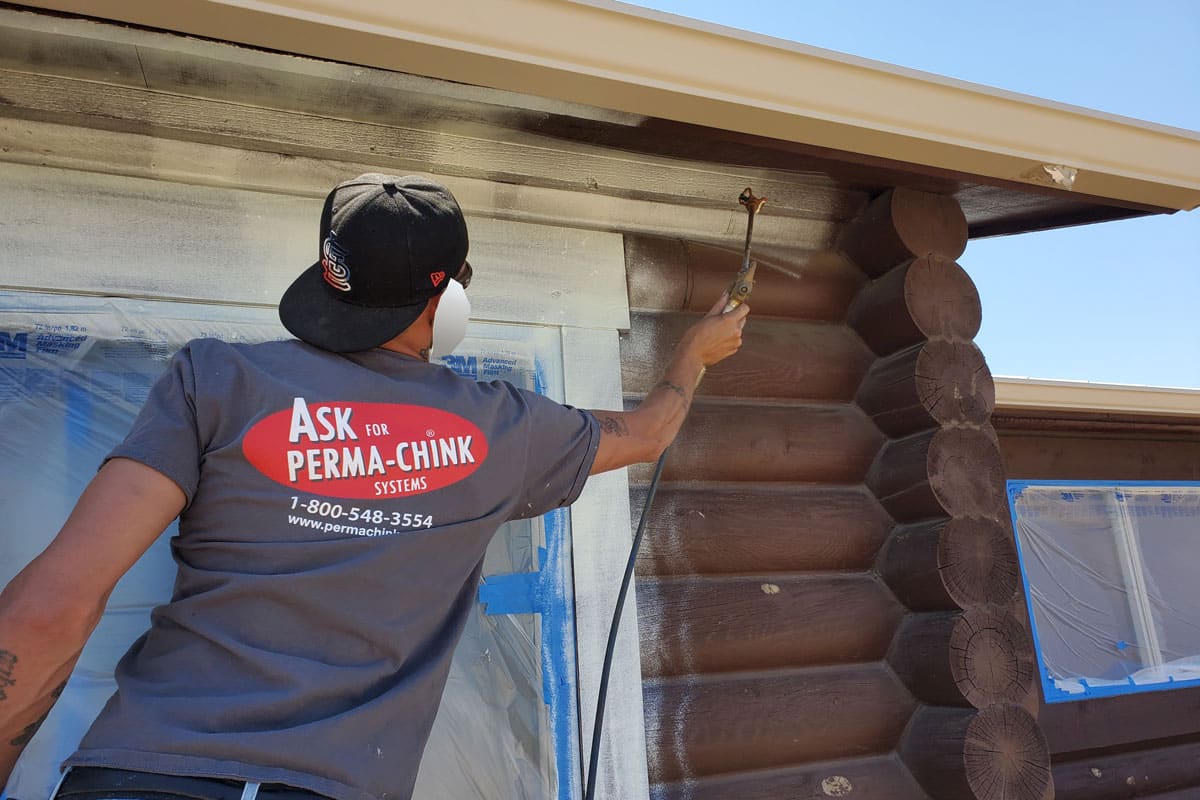
Chemical Stripping
Used only when blasting is neither the safest nor the most effective option. We evaluate each home to determine the appropriate removal method.
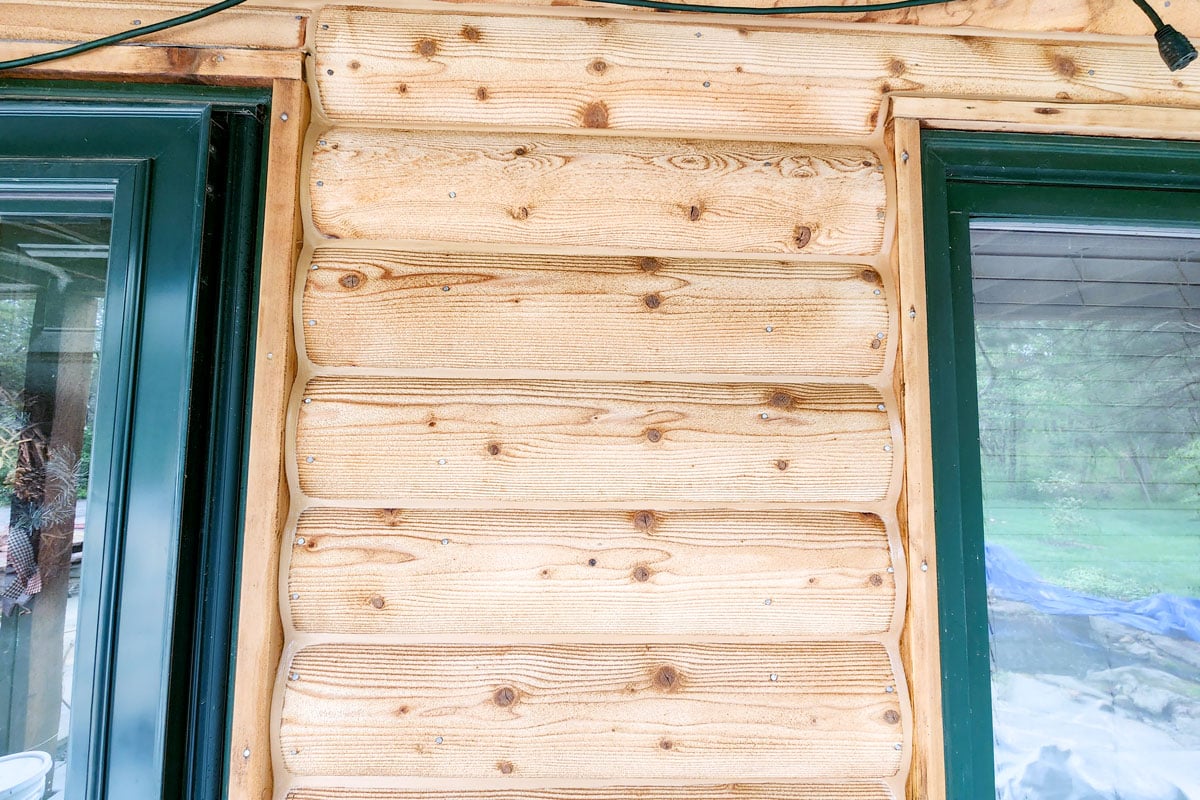
Caulking
Most log homes rely on caulking at joints, around windows and doors, checks, and transition areas. Proper application requires correct joint preparation, backing material placement, and flexible sealant systems designed specifically for log construction.
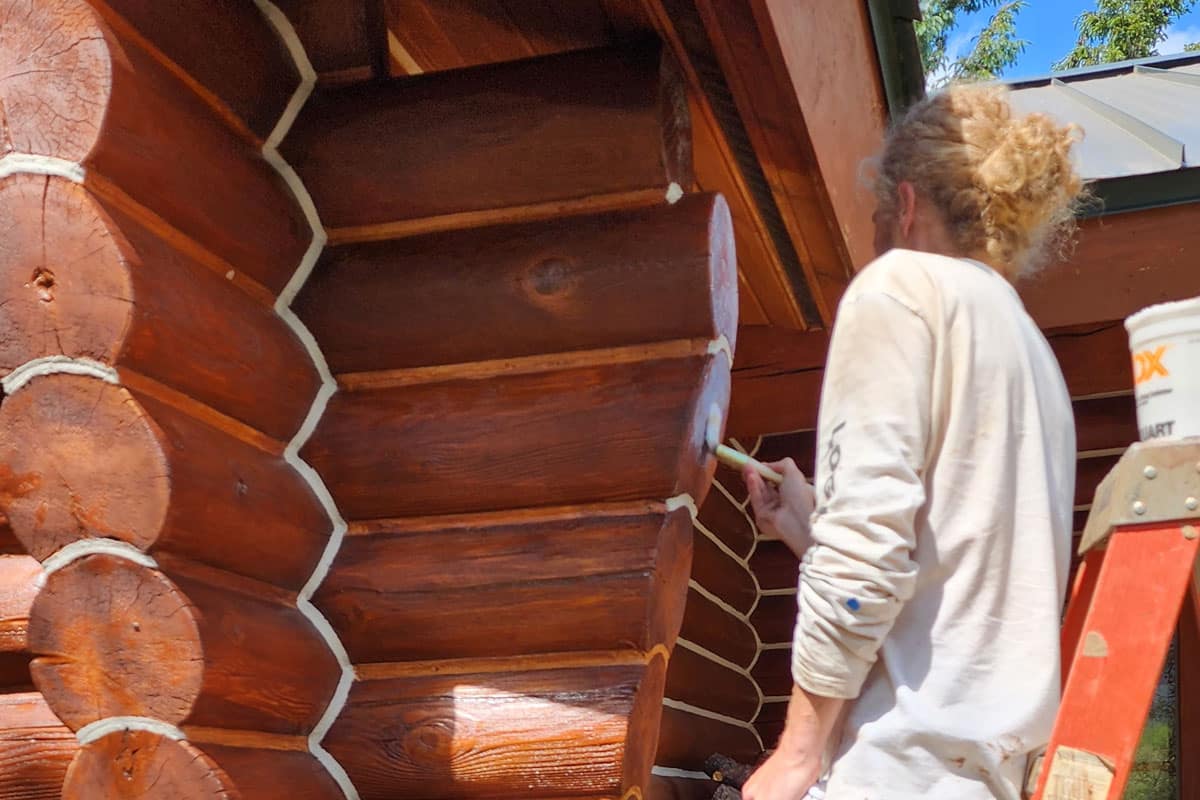
Log Home Maintenance
We will help you preserve the beauty and performance of your log home through annual inspections and minor repairs using the highest‑quality products and exceptional craftsmanship.
Don’t Skip Surface Preparation
Skipping sanding log home surfaces when needed can lead to uneven stain penetration and premature failure. Proper prep is the foundation of long-term protection.
If your logs need refinement before refinishing, we can evaluate the condition and recommend the right approach.
Common Questions About Sanding Log Homes
Do you always sand after media blasting?
Not always. Sanding log cabin exteriors is typically done when stubborn stains remain or the tail ends require smoothing.
Can you make my logs smooth like glass?
No. Log homes are meant to retain natural texture. Sanding wood is controlled to preserve character while improving stain adhesion. You can think of it like your fingernails: the polish adheres best when you file them before applying the polish.
Is sanding necessary before staining?
In many cases, yes. Proper sanding of log home surfaces improves stain penetration and finish consistency.
Can I sand my log home myself?
Improper sanding can flatten grain or damage log profiles. Professional sanding of logs ensures controlled, even preparation.
What is grinding used for?
Grinding is typically used on exposed tail-end grain to smooth rough surfaces before staining.