No two log homes are the same. From round, hand-hewn cabins tucked deep in the woods to sleek, modern lodges with clean, rectangular lines—every log home tells a story through the shape and style of its logs.
The log profile you choose isn’t just about looks. It affects how your home handles moisture, resists air leaks, and endures over time. Some log styles require more sealing and care than others, and understanding the differences can save you time and money in the long run.
At Log Masters Restorations, we’ve worked with nearly every log style found across the country. Each one has its own strengths, quirks, and care requirements. Understanding them is the first step to keeping your home strong and beautiful for generations.
Why Log Style Matters
The style of log your home is built with determines more than its visual appeal. It affects how well your home sheds rain, blocks wind, and prevents pests and rot.
Different profiles expand and contract at varying rates, which means each style requires a specific approach when it comes to sealing, chinking, and restoration. Recognizing your log type allows you—and your restoration team—to use the right materials and methods to preserve its structure and appearance.
The Most Common Log Styles
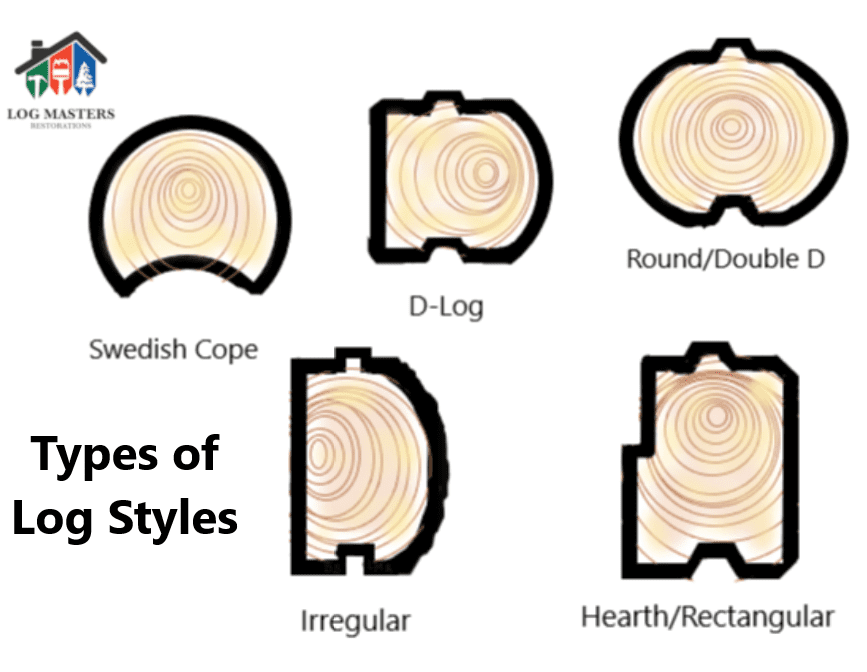
Every log home begins with a choice: round or flat, milled or handcrafted, traditional or modern. Below are the five styles most often used in log construction today.
Swedish Cope
Swedish Cope is one of the oldest and most recognized log profiles. Each log has a concave groove on the bottom that fits snugly over the rounded top of the log below it, creating a tight interlocking seal.
Because of this design, Swedish Cope homes have fewer visible gaps and require less caulking than other profiles. The tight fit also enhances insulation, helping to regulate temperature and improve energy efficiency.
However, these logs rely on precision milling. If a home settles unevenly or the logs shrink after installation, small gaps can appear that need resealing. Regular inspections ensure those joints remain watertight.
D-Log
D-Log homes are named for the shape of the log itself: one side flat (inside the house) and the other rounded (outside). This design provides homeowners with a cozy, traditional exterior look while maintaining flat interior walls for easier furniture placement and finishing.
Because the interior surface is smooth, D-Log homes are easier to clean and often more energy efficient. The main challenge arises from the flat backside of the log, which can retain condensation if ventilation is inadequate. Consistent staining and sealing help prevent moisture buildup that can cause rot or discoloration.
This style is popular among homeowners who want a traditional appearance with modern comfort.
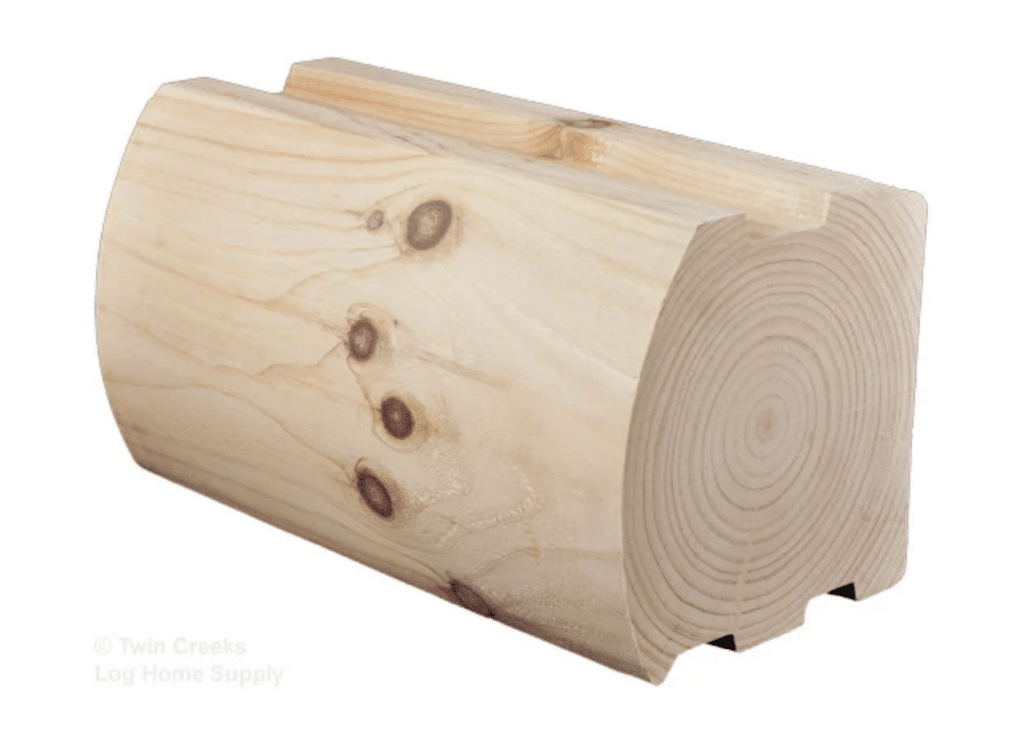
Image Credit: Twin Creeks Log Home Supply
Double D or Full-Round
Double D—or full-round—logs are precisely what they sound like: rounded on both sides, creating the look and feel of a solid, handcrafted log home inside and out. This style delivers unmatched visual authenticity and impressive sound insulation.
Because each log is fully round, homes built with this style require a bit more caulking and sealing. Scribbed round logs are typically bigger than eight inches, so the material is more expensive. Most of the time, but not always, these larger logs are chinked, not caulked. Chinking is automatically more expensive than caulk and requires a lot more skill, especially when making repairs, to keep it looking uniform. Also, if stain maintenance is ever needed, the chinking may have to be repainted to keep the color uniform.
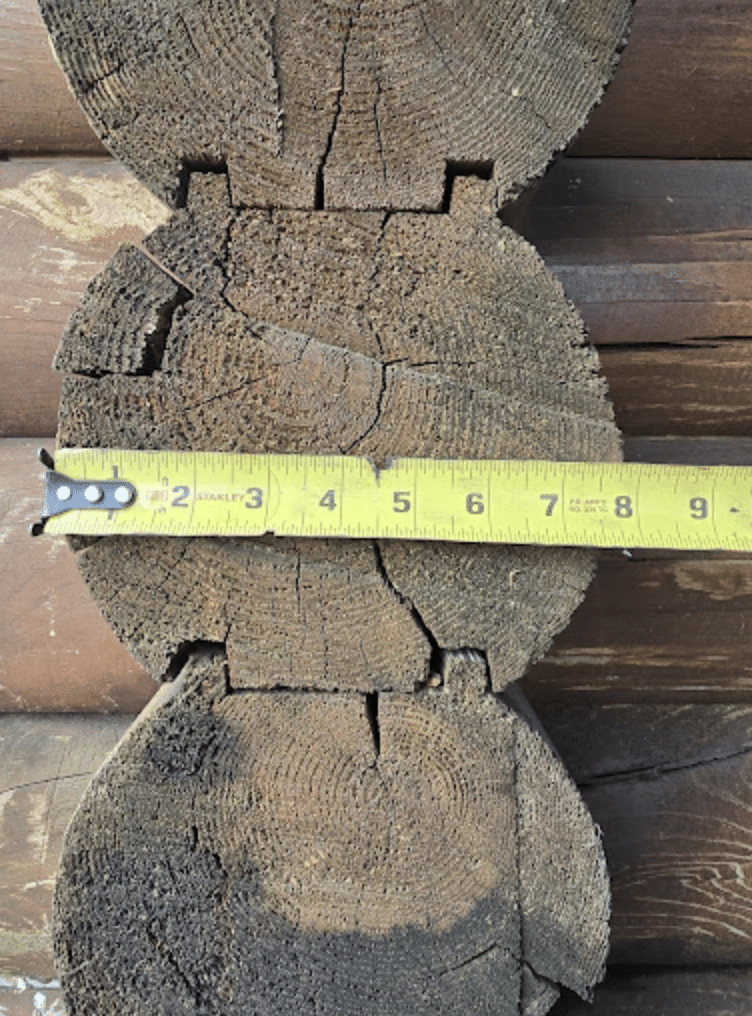
Rectangular or Hearth Logs
Rectangular logs are milled with smooth, flat faces that stack neatly on top of one another. They’re ideal for homeowners who prefer a modern or hybrid look—think log home warmth with a contemporary edge.
Their clean, even surfaces require minimal chinking, making staining and refinishing easier than with irregularly shaped surfaces. The flat edges also promote excellent contact between logs, reducing drafts.
Flat corners take more abuse from the weather than rounded ones. Regular sealing at the ends keeps moisture out and the logs strong.
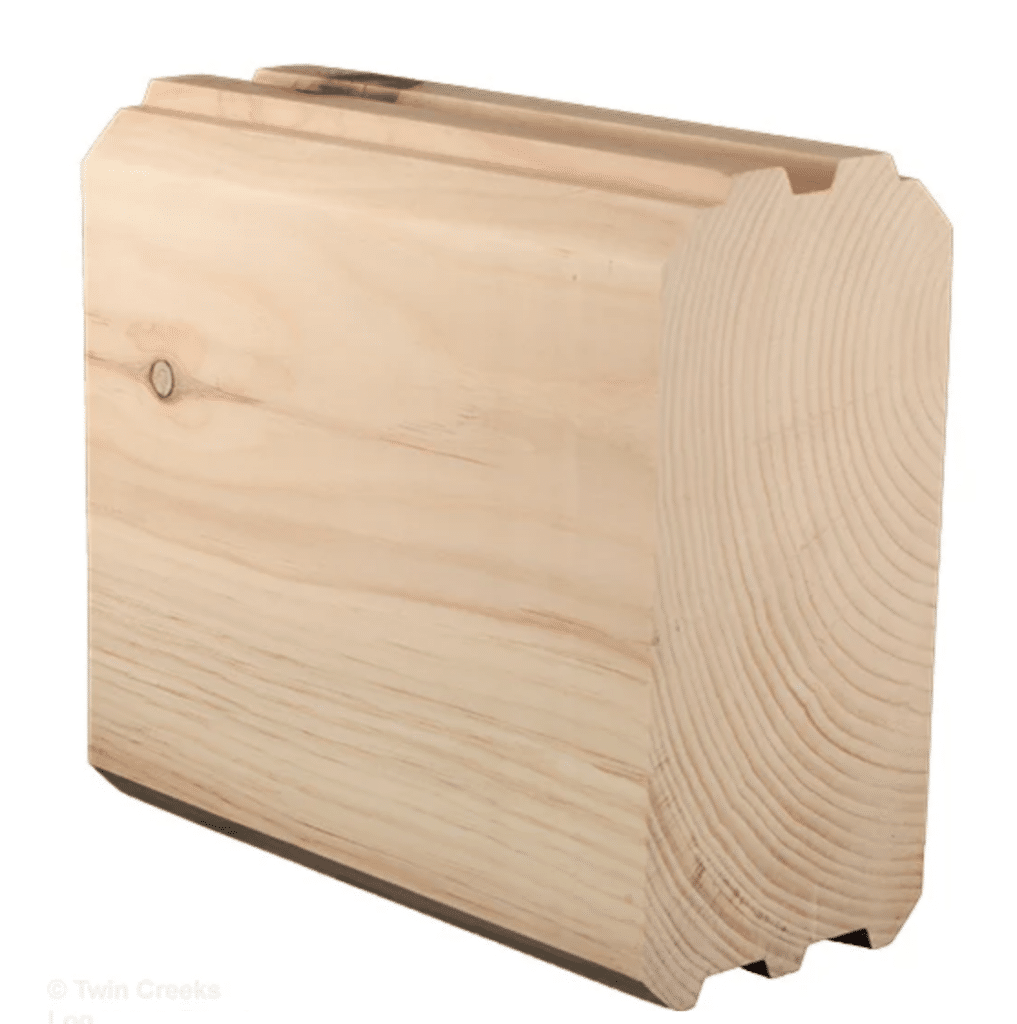
Image Credit: Twin Creeks Log Home Supply
Irregular or Handcrafted
Handcrafted logs are the definition of authenticity. Each log is chosen, stripped, and shaped by hand, often using traditional tools. No two are the same, which gives every handcrafted home a one-of-a-kind appearance.
These logs typically follow the natural taper of the tree, preserving knots and texture that show the wood’s character. The extra thickness provides superior insulation and a strong connection to traditional log craftsmanship.
The tradeoff is time and cost. Handcrafted logs require more labor to build and more detail during restoration. Because the surface isn’t uniform, moisture can linger. Consistent staining and sealing protect the wood and preserve the beauty that makes handcrafted logs special.
Log Surface Finishes
Your log finish plays a big role in how the wood reacts to weather and stain. Every surface requires a different level of care.
Smooth-Milled Logs
Smooth-milled logs are machine-cut for uniformity. They stain evenly and are easier to wash and maintain. The smooth surface sheds water efficiently, which reduces the risk of rot.
However, these logs can sometimes appear too uniform for homeowners who prefer a more rustic look. Keeping the surface clean and sealed preserves both its appearance and its protection.
Peeled or Skinned Logs
Peeled logs are stripped of bark using drawknives or mechanical tools, leaving behind a slightly rough texture and natural color variation. This finish strikes a nice balance between rustic and refined.
Because the surface isn’t perfectly even, stains soak in at different rates. Stain doesn’t absorb evenly on textured logs, so the finish can fade or darken in places. Sealing them more often prevents moisture from taking hold.
Handcrafted Logs
Handcrafted logs retain their natural contours and tool marks, giving homes an old-world charm that can’t be replicated by milling. They’re stunning to look at but more demanding to maintain.
Their irregular surfaces can hold dirt, dust, and moisture, so washing, drying, and sealing must be done with care. Homeowners who choose this finish often do so for its visual character, accepting that it requires extra care to maintain its beauty.
Joints, Corners, and Log Ends
Corner styles influence more than appearance—they also affect how tightly your home fits together, how well it insulates, and how much work restoration requires.
Butt and Pass
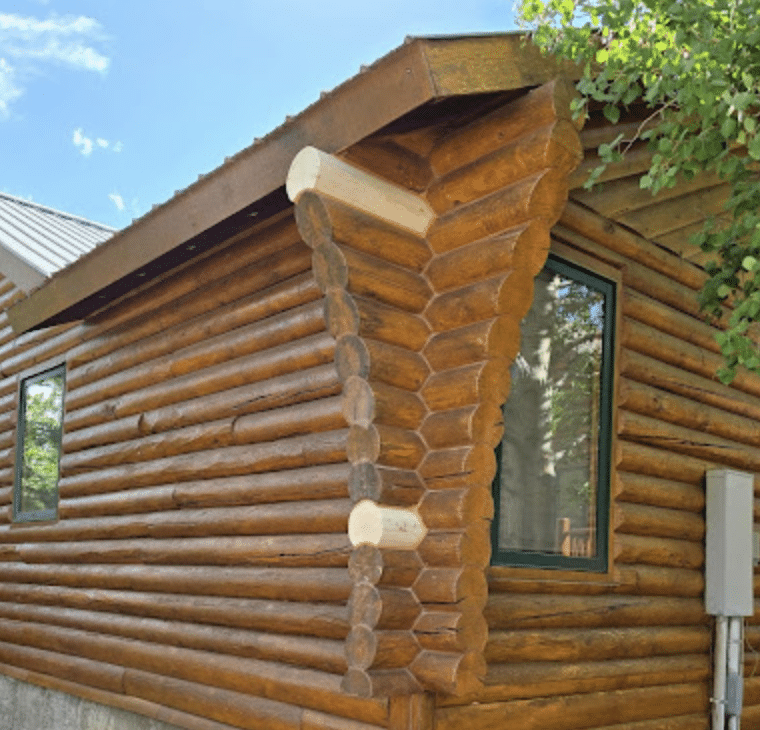
The most common style, butt and pass, features corners where log ends alternate at each corner of the structure. One log extends past the corner while the next log butts into it, creating a staggered, sturdy pattern.
This method is straightforward and cost-effective. It’s also easier to repair since damaged logs can be replaced without dismantling entire sections. The main challenge lies in maintaining the joint between logs to prevent moisture from seeping in at the butt ends.
Saddle Notch
Saddle notch corners are carved so each log locks into the one beneath it, much like fitting puzzle pieces together. The result is a tight, interlocking connection that gives traditional log homes their signature charm.
Over time, logs may shift and create small gaps. Regular checks and minor chinking keep the joints sealed. With good upkeep, saddle notch corners hold strong for many years.
Dovetail
Dovetail corners use angled cuts that lock together like a wedge, keeping the logs from shifting or pulling apart. This traditional style, common in Appalachian and Eastern log homes, is known for its strength and craftsmanship.
Restoring dovetail corners takes skill. Each joint must be shaped to match perfectly, and sealing must be done with care to keep the wood tight and weatherproof. For homeowners who value precision and classic craftsmanship, dovetail construction stands out as one of the best.
Flare-End and Decorative Corners
Flare-end corners showcase extended, flared log ends that highlight the tree’s natural shape. They’re most often found on custom builds or luxury cabins designed to stand out.
While they’re striking, they also add complexity to restoration. The extended ends are more exposed to the weather, which can lead to faster wear and sun damage. Protective stains and sealants must be applied regularly to maintain their strength and beauty.
How Log Style Affects Maintenance and Restoration
Your log home’s profile, finish, and corner style all influence how it should be maintained. Rounded logs with deep grooves hold more moisture and need more frequent sealing. Smooth logs dry faster and require fewer touch-ups, but they still need consistent protection against UV damage.
Certain log styles—like handcrafted or full-round—require more chinking and detailed work during restoration. Homes with complex corners, such as those with dovetail or flare ends, need more time to repair because each piece must be shaped and sealed precisely.
This is where our experience shows. At Log Masters Restorations, we’ve spent over 20 years working on log homes across every kind of weather. We know how each style holds up, and we tailor our repairs to match your home’s exact needs.
Our restoration process often includes:
- Careful media blasting or sanding to remove old finishes
- Precision chinking and sealing for your log type and corner style
- Log repair or replacement that matches your existing structure
- Expert staining using products from Perma-Chink and Sashco for long-lasting protection
We also offer ongoing maintenance plans to help you stay ahead of wear and weather damage. Regular inspections and seasonal maintenance are the best ways to avoid costly repairs and preserve your home’s original charm.
At Log Masters, we don’t just repair log homes—we preserve the craftsmanship that built them.
Ready to protect your log home the right way? Schedule a professional inspection with Log Masters Restorations. Our team can identify your log style, assess its condition, and create a personalized plan to keep your home strong for generations to come.